Groovy Psytrance Grids: One Simple Trick
Watch the full breakdown
Groovy grid sections come from getting the rhythm right first, not from perfect sounds. The simple trick is to jam the rhythm with whatever sounds are to hand, lock the groove, then swap in the best sounds afterwards. Chasing the perfect sample first kills the groove.
In the video Psiger shows this workflow, including how organising your library makes it fast. Here is the method.
- Grids groove because of rhythm, not the exact sound. Rhythm first.
- Jam the rhythm with placeholder sounds to lock the groove.
- Organise your library so you can find sounds fast and keep your flow.
- Replace placeholders with better sounds only after the groove is right.
- Pick the exact starting point inside a sample so it lands on the grid.
Grids that groove start with rhythm
▶ Play from 0:00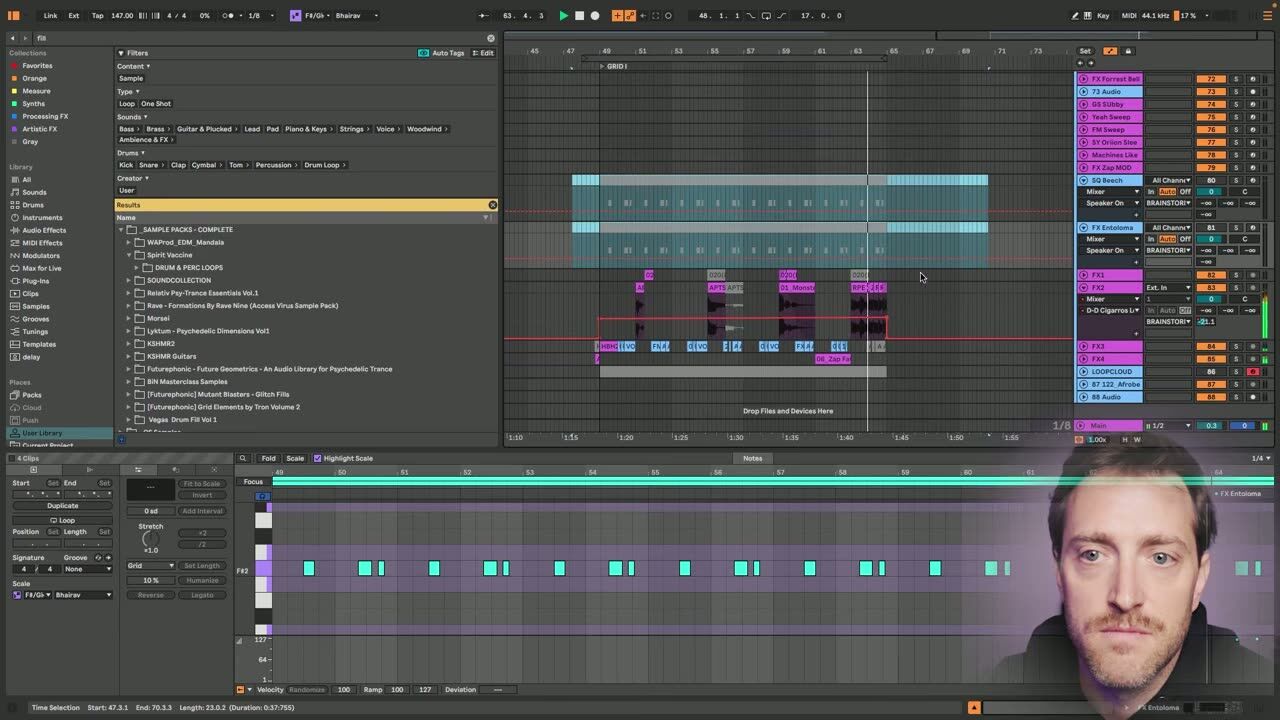
A grid grooves because of its rhythm, the placement of hits against the offbeat, not because of which exact sound plays. So the trick is to focus on rhythm first and treat sound choice as a later step.
Get the groove feeling good with placeholders, and the section is already halfway there.
Organise your library for speed
▶ Play from 2:14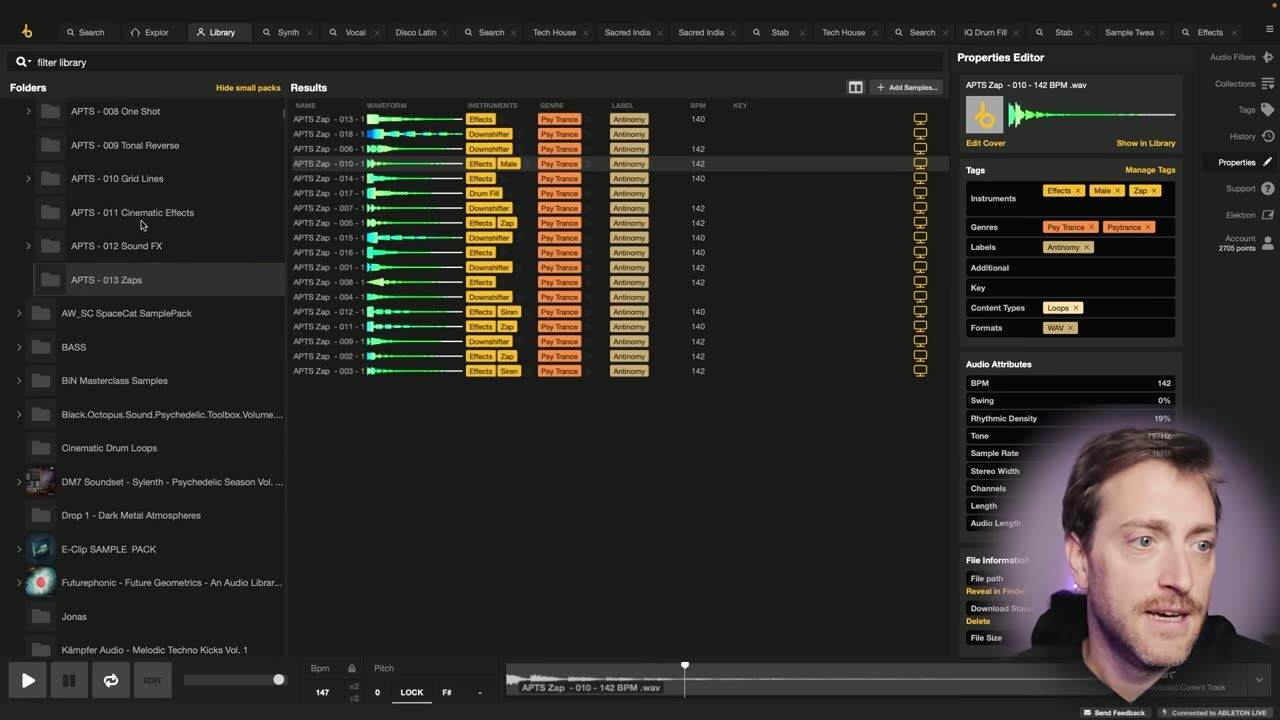
Use a sample manager like Loopcloud with your own psytrance samples, and organise your library so you can find sounds fast. A tidy, searchable library means you are not breaking flow to hunt for a sound mid-jam.
Library organisation is unglamorous but it is what keeps the creative process moving.
Jam the rhythm, then replace sounds
▶ Play from 6:42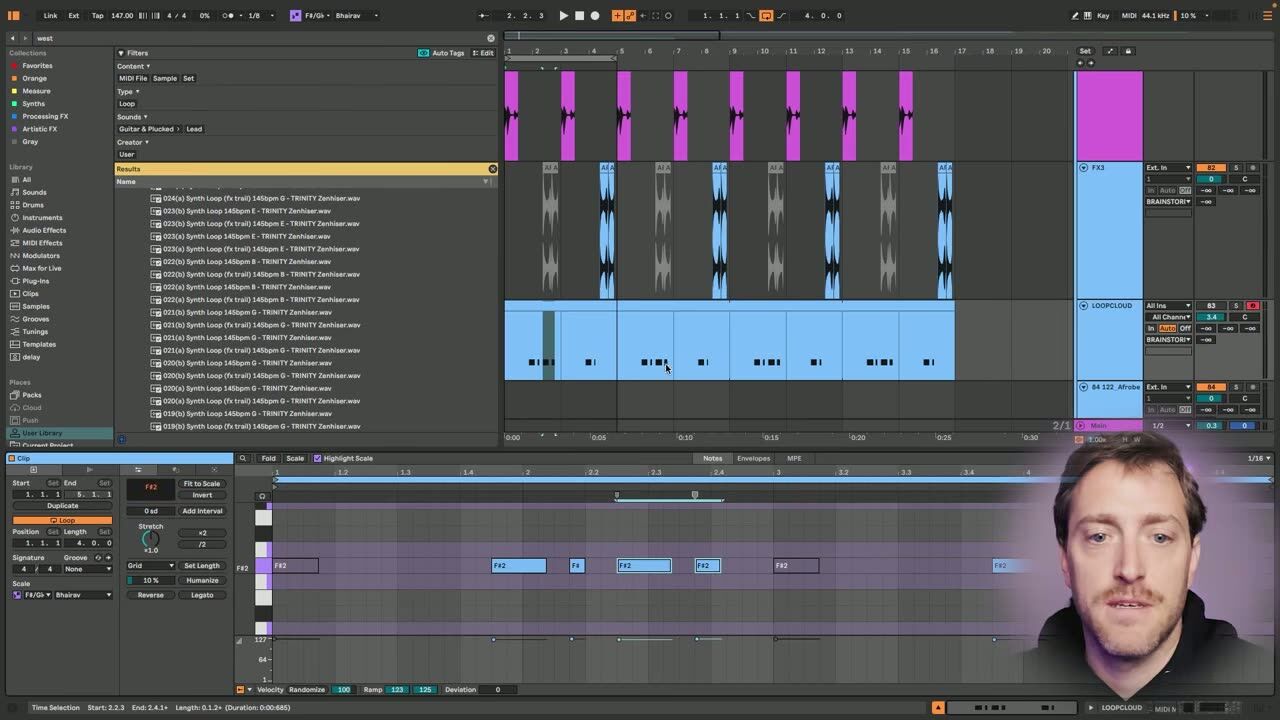
Jam a rhythm quickly with placeholder sounds to lock the groove, then go back and replace each element with a better sound. Because the rhythm is already right, swapping sounds only improves it, and you never lose the groove chasing perfection up front.
Groove first, sound design second. That order is the whole trick.
Pick the best starting point in a sample
▶ Play from 15:04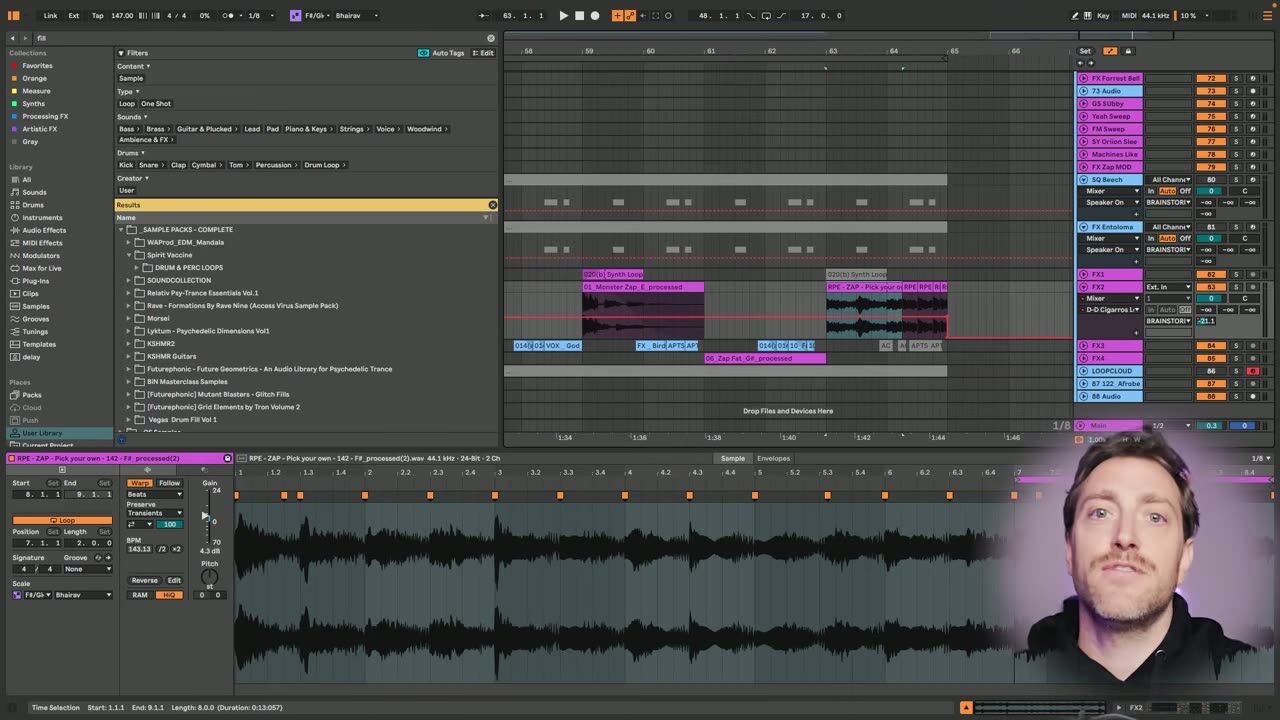
When you place a sample, choose the exact point in it that fits the rhythm, the transient or texture that lands right on the grid. The starting point inside a sample changes how it grooves, so pick it deliberately.
This small detail is often the difference between a sample that locks and one that feels slightly off.