Great Psytrance Grid Sections With MoRsei
Watch the full breakdown
Grid sections are the offbeat, rhythmic passages that give a psytrance track its groove and flow, the parts that make people move before any big drop. Building them well is about call-and-response, space, and knowing how much to repeat.
In this part two, Fran, aka MoRsei, breaks down high-energy grid sections from a real project. Here are the core techniques.
- A grid section is interlocking offbeat elements that create groove and flow.
- Build the main hook as a call and response, one element asking, another answering.
- Use stops, gaps and space so the groove breathes, then fill with FX and stabs.
- A gated flanger and layering add rhythmic motion.
- Balance repetition: four-bar stabs with sparse fillers, and vary enough to hold attention.
What a grid section is
▶ Play from 0:00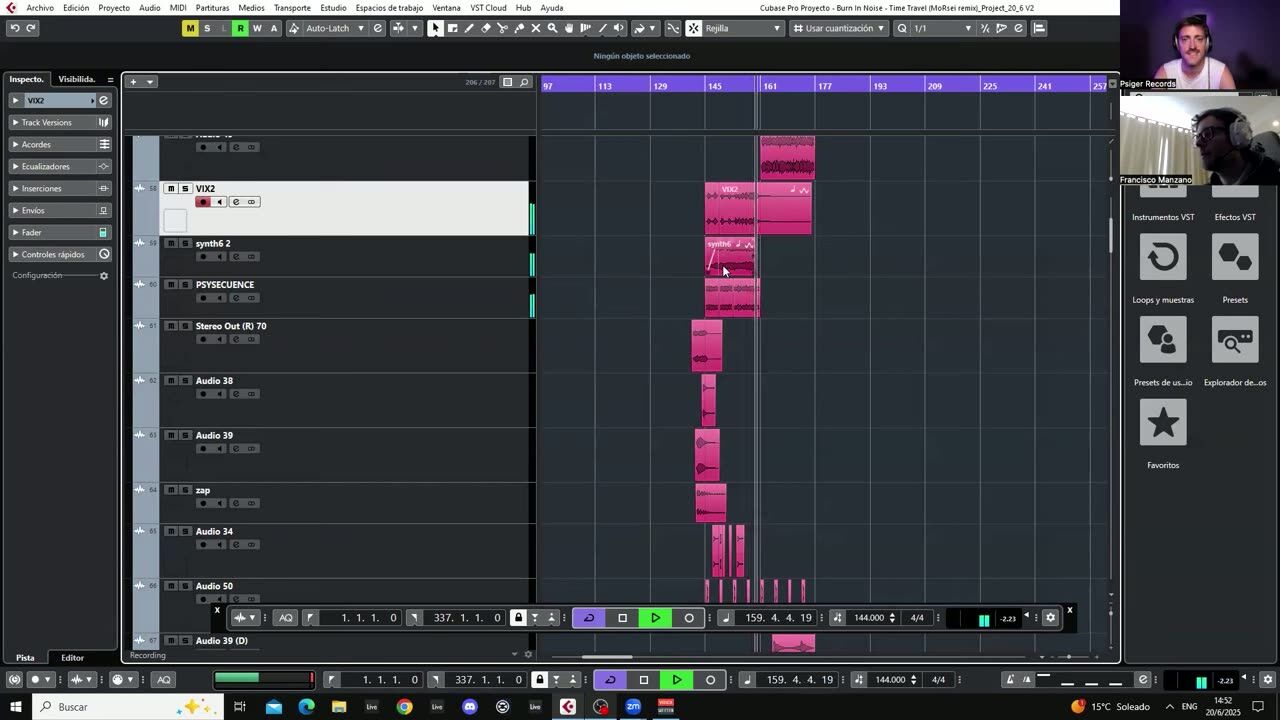
A grid section is a rhythmic passage built from short, interlocking elements that create groove and movement, usually offbeat against the kick. It is the engine of a psytrance track flow, and getting it right is what makes the track roll.
Think of it as a conversation between elements rather than a stack of loops.
Call-and-response hooks
▶ Play from 2:18The main hook works as a call and response: one element asks, another answers. This back-and-forth, often using vocals or stabs, creates the movement and flow that keeps a grid section interesting instead of static.
Design your hook as a dialogue and the section immediately grooves.
Use space, stops and FX
▶ Play from 4:14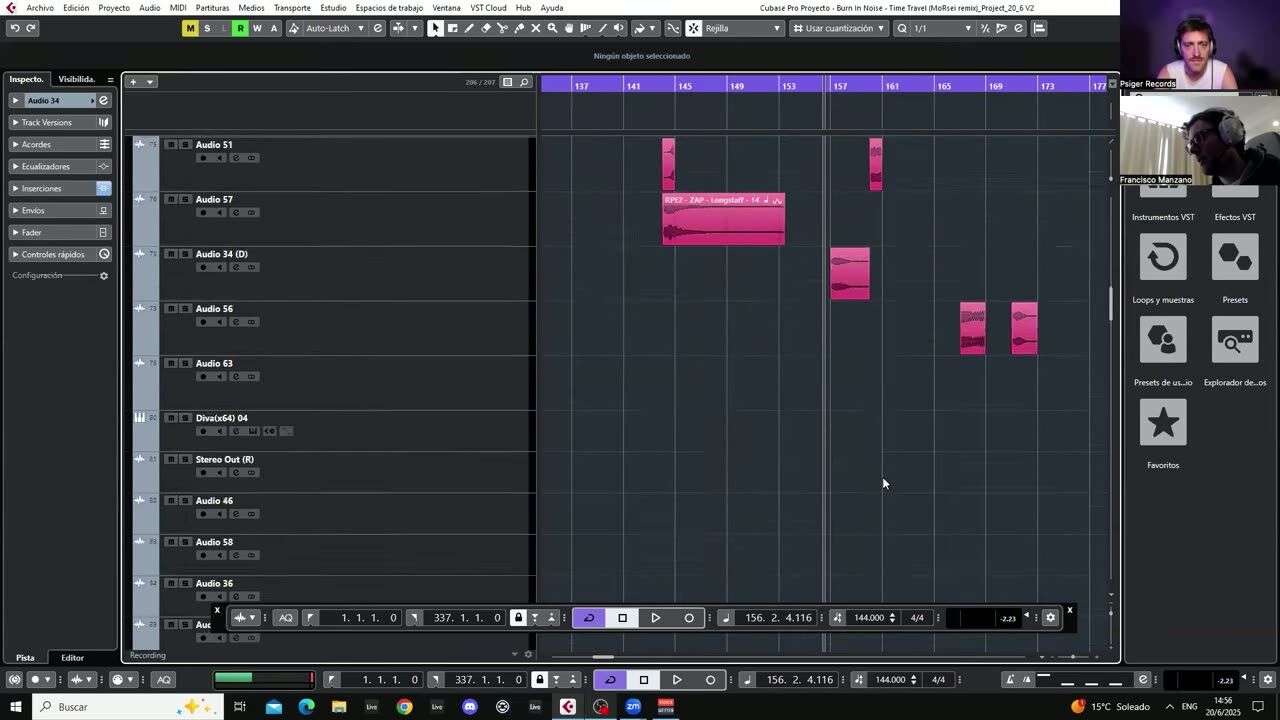
Space is a tool. Use stops, gaps and flow techniques so the groove breathes, then fill the gaps with FX, stabs and texture, a gated flanger and layering add rhythmic motion. The interplay of sound and silence is what gives a grid its energy.
What you leave out shapes the groove as much as what you put in.
How much repetition is too much
▶ Play from 9:37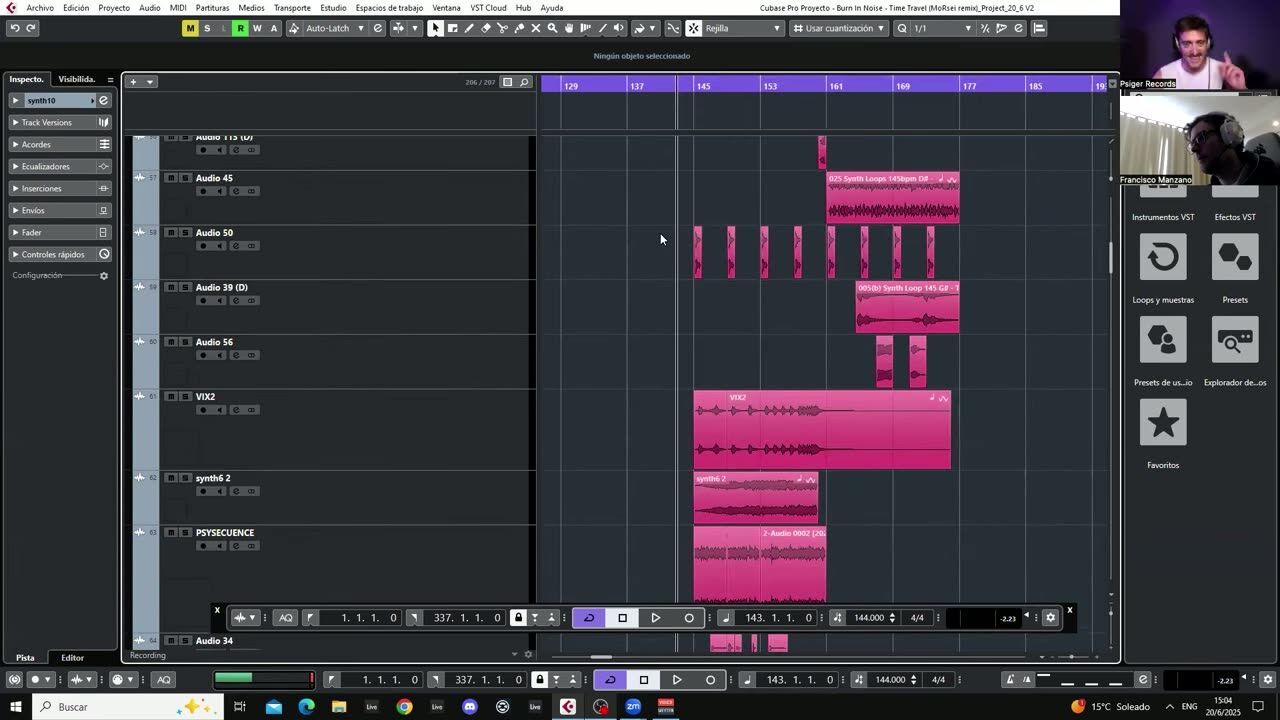
Grids live on repetition, but too much loses the listener. The balance is smart looping, four-bar stabs with sparse fillers, mixing one-shots and loops, and layering atmospheric fillers so the section evolves. Balance rhythmic and atmospheric elements so it stays engaging.
Repeat enough to hypnotise, vary enough to hold attention.