Groovy Psytrance Glide Bass in Serum
Watch the full breakdown
A groovy psytrance bass does not need a complicated patch. It starts as a simple saw and gets its character from wave shaping and how you play it. The groove comes from the pattern and a glide trick, not from stacked layers.
In the video Psiger builds the sound in Serum, shows where effects matter and where they are optional, and dials in the kick-and-bass interaction. Here is the walkthrough.
- Start with a single saw wave. That is the whole foundation.
- Use wave warp bend and asymmetry to give the saw its own character.
- Distortion adds weight and harmonics, a compressor keeps it consistent.
- Effects are optional polish. The sound and pattern have to work first.
- Cut the bass attack so it does not fight the kick transient.
- Glide certain notes into each other for the rolling groove, then add filter modulation for life.
Basic saw bass setup
▶ Play from 0:00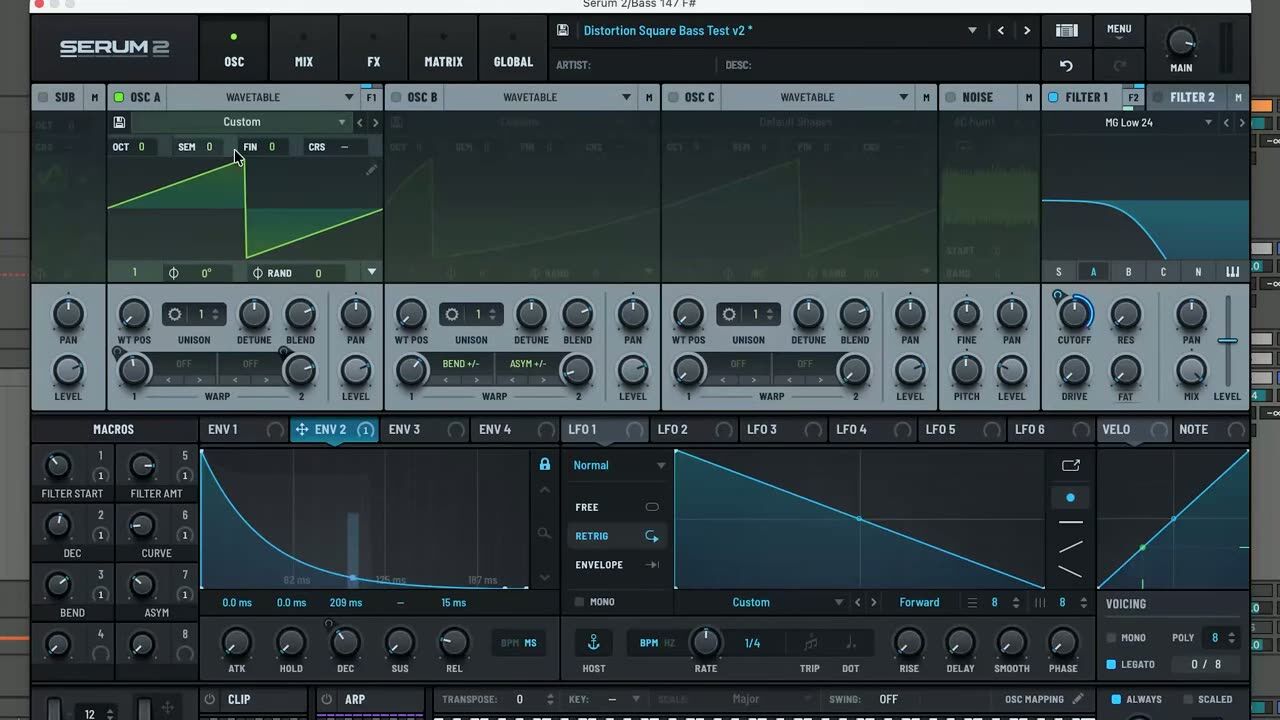
Start with a single saw wave. That is the whole foundation of the bass. Getting a clean, well-tuned saw sitting at the right octave gives you everything you need before any processing.
Resist stacking oscillators. The character comes later from shaping, not from layering more sound.
Wave warp: bend and asymmetry
▶ Play from 1:05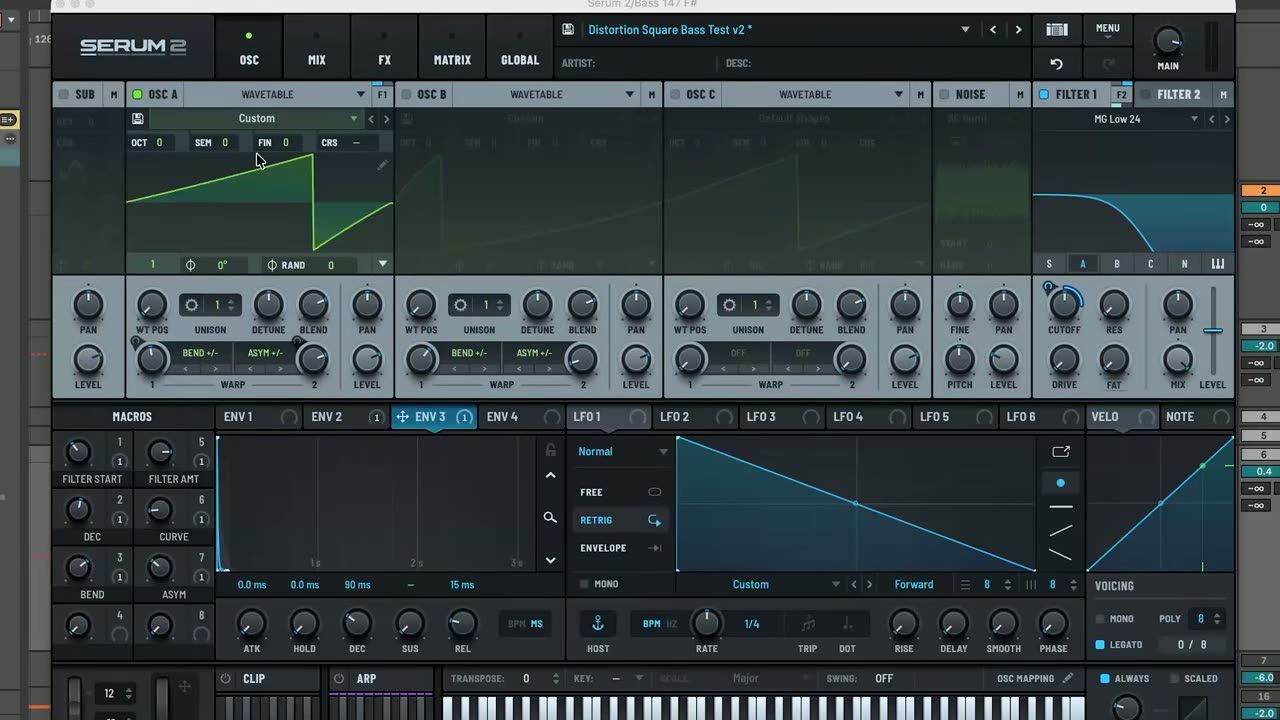
Serum wave warp lets you bend the saw and add asymmetry, which changes the harmonic content and gives the bass its own character. A small bend can take a generic saw and give it edge or growl.
This is where the sound stops being a stock saw and starts being yours.
Shaping with distortion and compressor
▶ Play from 2:13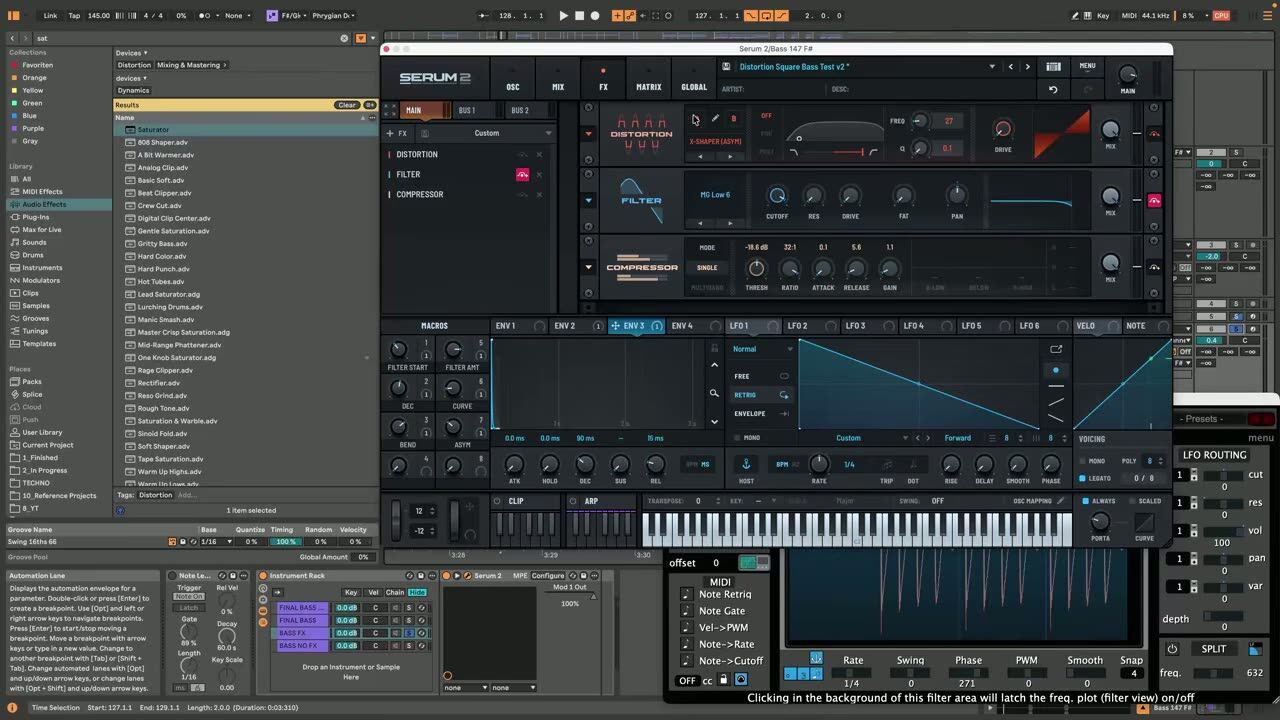
Distortion adds harmonics and weight, and a compressor evens out the dynamics so the bass hits consistently. Together they turn the shaped saw into a full, present low end that holds up in a mix.
Push the distortion for grit, then use the compressor to keep the level controlled.
Why effects are optional
▶ Play from 4:29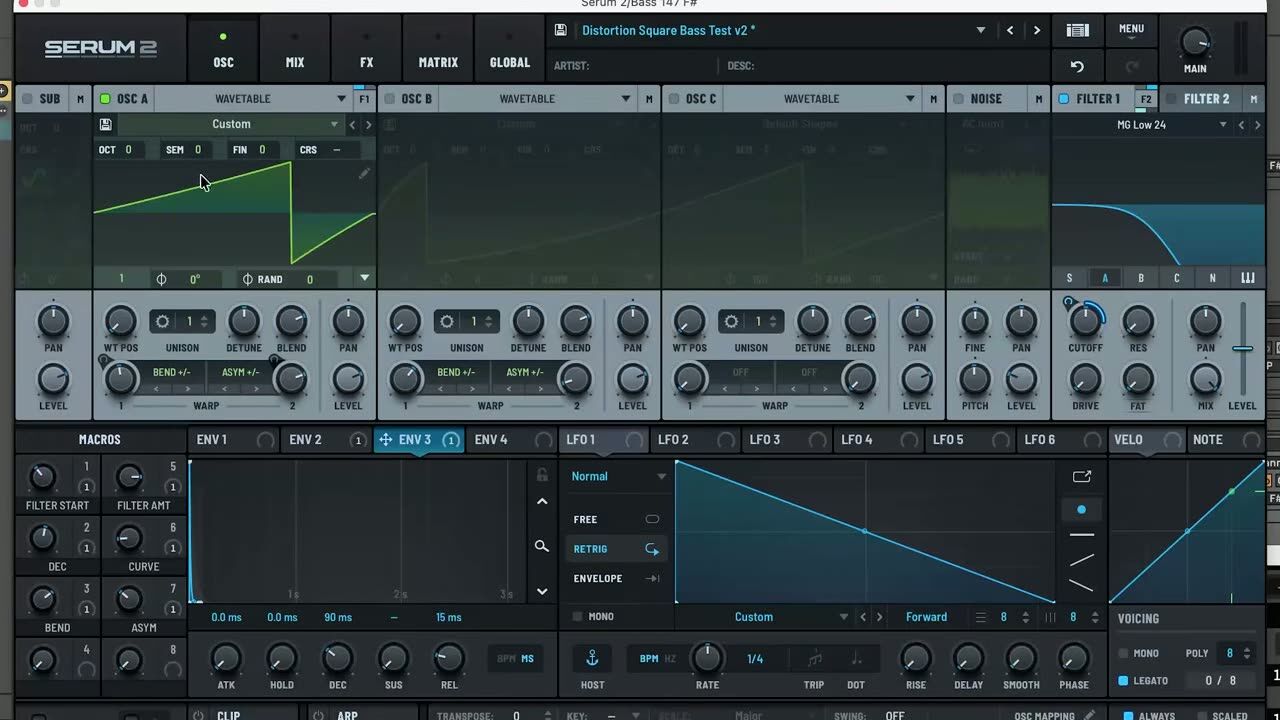
The core bass principles matter more than the effects. A well-shaped saw with the right pattern already grooves. Effects polish it, but if the fundamentals are wrong no amount of processing will save it.
Nail the sound and the groove first, then treat effects as the finishing layer.
Kick and bass interaction
▶ Play from 5:30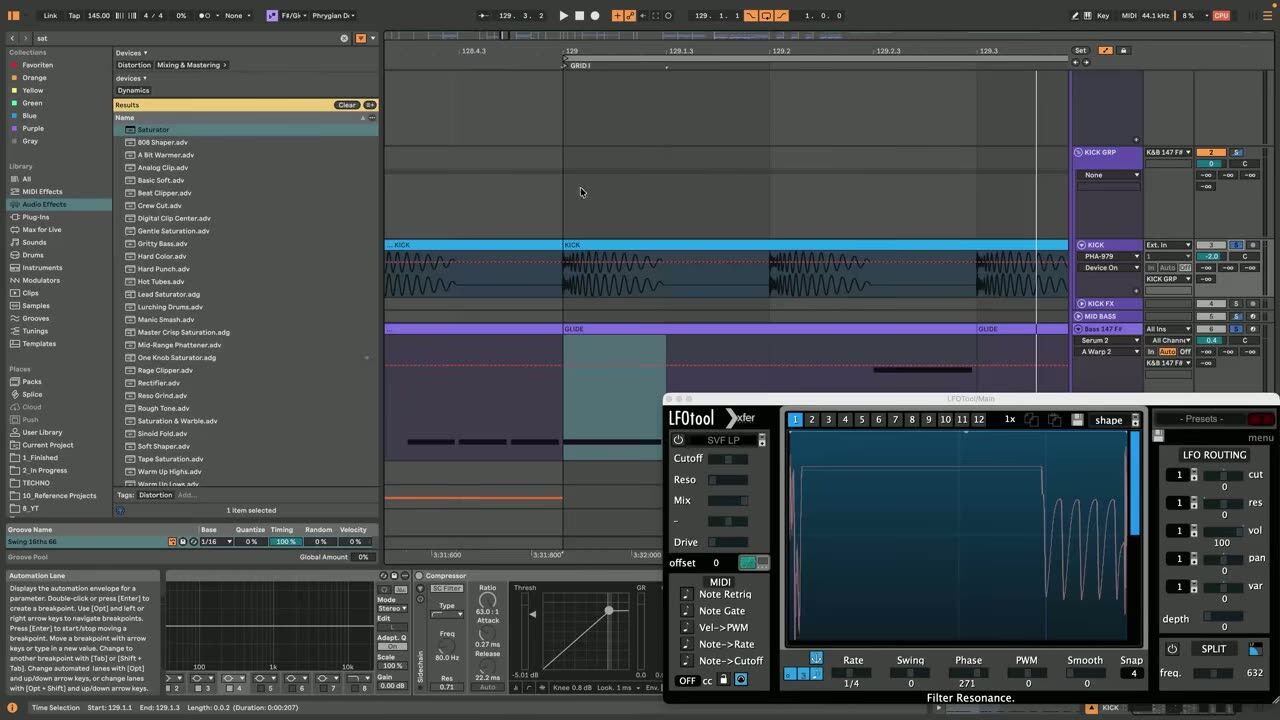
Cut the attack of the bass so it does not fight the kick transient. The kick owns the first moment of each beat, and the bass slots in right behind it. This is what makes the low end tight instead of muddy.
Get this interaction right before you worry about anything else on top.
Groove pattern with the glide trick
▶ Play from 7:38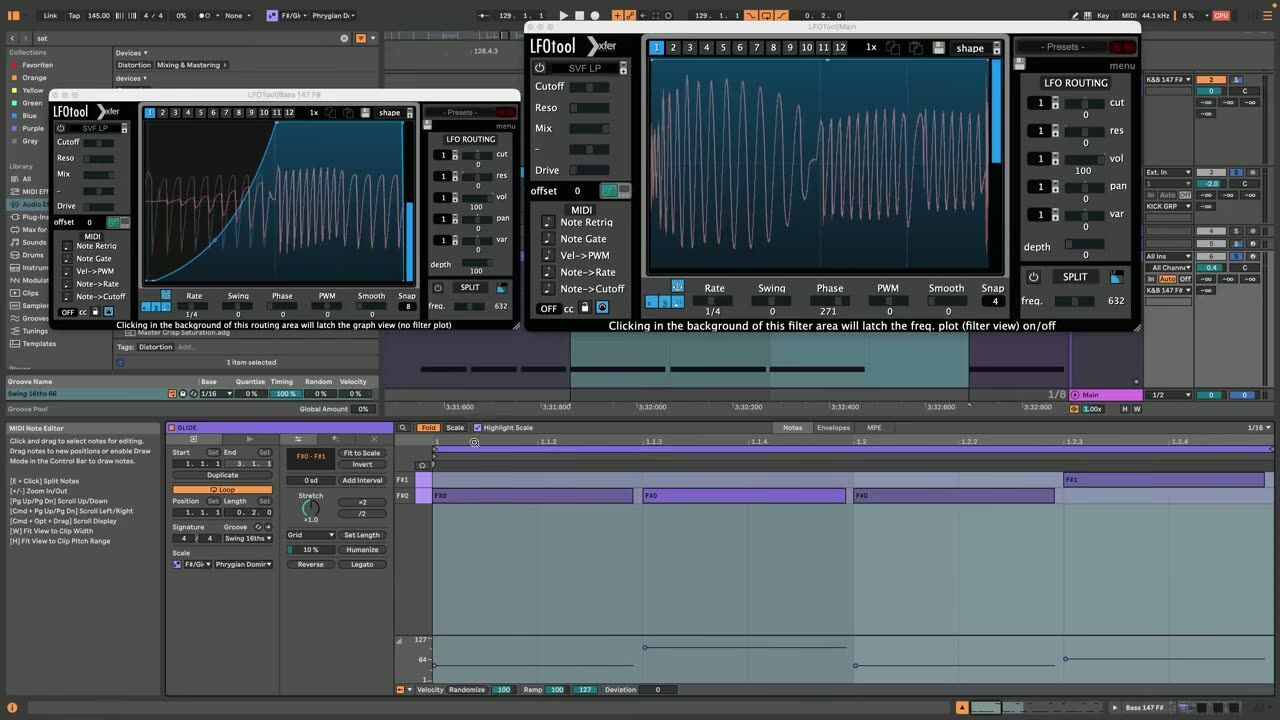
The groove comes from the pattern plus glide: sliding certain notes into each other creates movement and a rolling feel. Add a filter modulation trick on top for extra life, and the bass line breathes instead of repeating flatly.
The glide is the detail that turns a static bass into a groovy one.