Psytrance Triplet Bassline: Groove and Swing
Watch the full breakdown
Straight 16th basslines get stiff fast. Triplets and swing are what make a psytrance track roll and keep the floor moving. The trick is knowing where to place the notes and how to keep a pool of grooves to pull from.
Grab the free triplet pack and follow the patterns from the video.
- Triplet grids give the bass a rolling feel that straight 16ths cannot.
- Placing notes on the offbeat, between the kicks, is what makes the groove drive.
- Free notes and small variations stop a rolling bassline from feeling robotic.
- Build a groove pool: a collection of patterns you can drop in and swap.
- Keep the synthesis simple. The groove lives in the MIDI and the placement.
What triplet basslines do
▶ Play from 0:00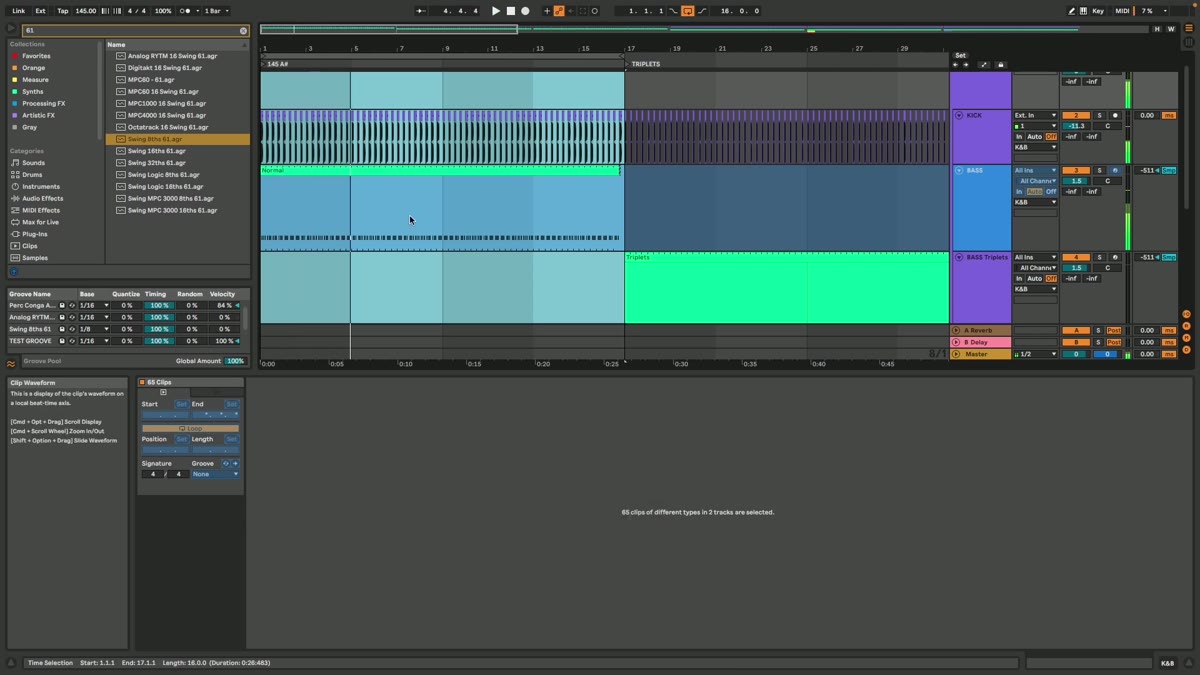
Switch the grid to triplets and the same notes suddenly roll instead of march. That rolling feel is the backbone of a lot of groovy and full-on psytrance. Start simple: a root-note triplet pattern locked to the kick.
Offbeat and free notes
▶ Play from 4:36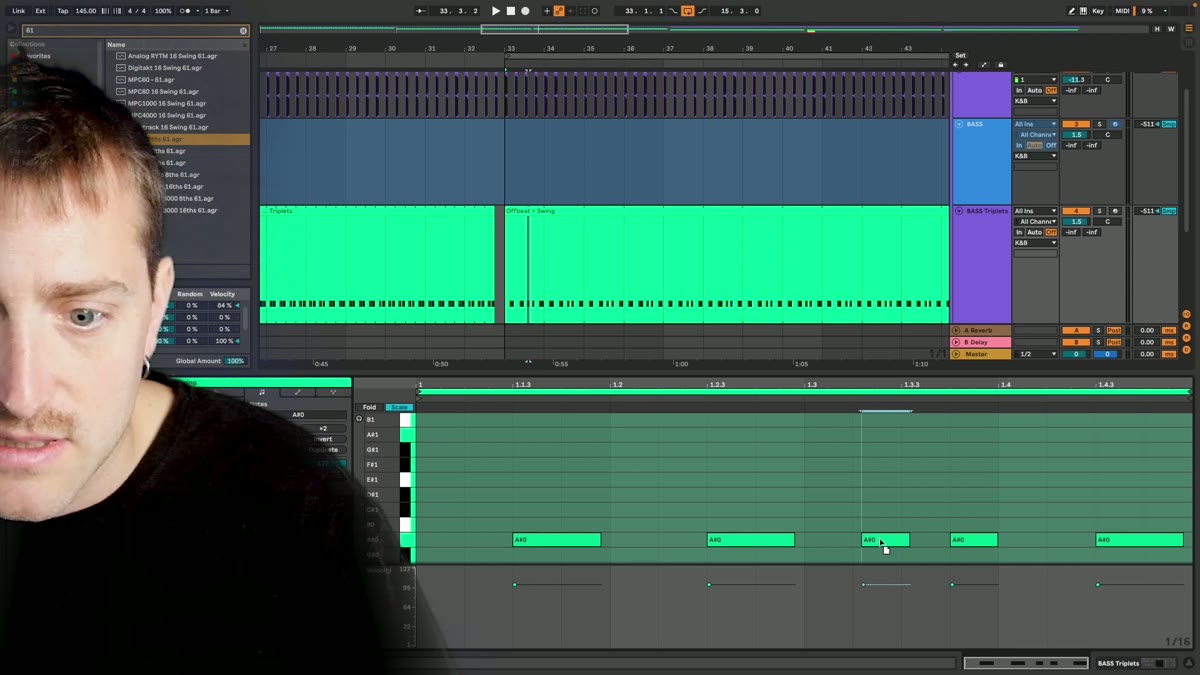
Placing notes on the offbeats, between the kicks, is where the groove comes from. Then add a few free notes and small variations so the line breathes and does not feel like a loop. The rolling bass should hit around the kick, not on top of it.
Build a groove pool
▶ Play from 5:53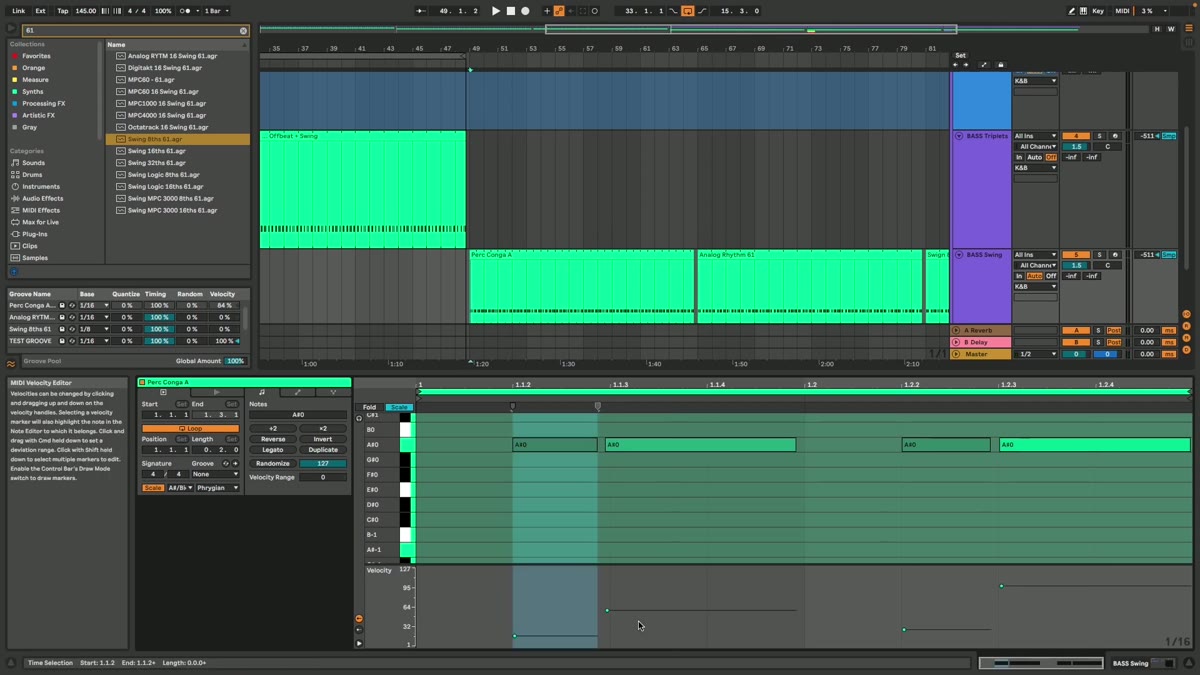
Rather than write every bassline from scratch, keep a groove pool: a collection of triplet and swing patterns you have made. Drop one in, tweak it to the track, and you have a strong starting point every time.
MIDI experiments
▶ Play from 10:16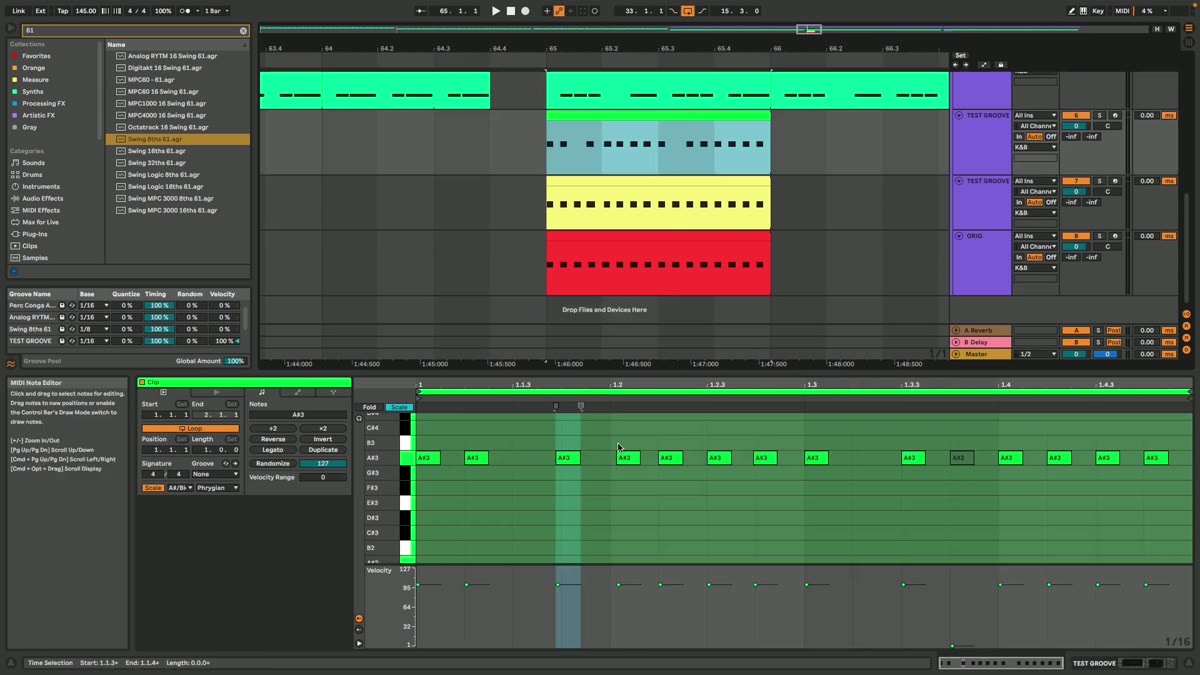
The last step is experimenting: shifting a note, adding a ghost, changing a velocity. Small MIDI moves are what separate a static loop from a bassline that pulls the track forward. Keep the synth simple and let the MIDI do the work.