Psytrance Arrangement: The 7 Rules of Structure
Watch the full breakdown
Most half-finished psytrance tracks do not die because the sounds are bad. They die in the arrangement, where the energy never goes anywhere. Good arrangement is really one thing: energy that keeps climbing, with resets placed on purpose.
In the video above, Psiger walks through the seven rules he uses to structure a track from the first kick to the outro. Read the rules below with the exact moment from the video for each one.
- Aim for roughly 7 to 7.5 minutes, and land every major change on an 8-bar boundary.
- Build in layers: kick and bass, then hats, then snare, then the open hat with a transition.
- Every section should push energy up. If muting a lead makes the track better, cut it there.
- Do not run more than about 64 bars of open hi-hat before a reset.
- Learn the structure first, so breaking it later is a choice and not an accident.
Rule 1 — Kick and bass come first
▶ Play from 0:00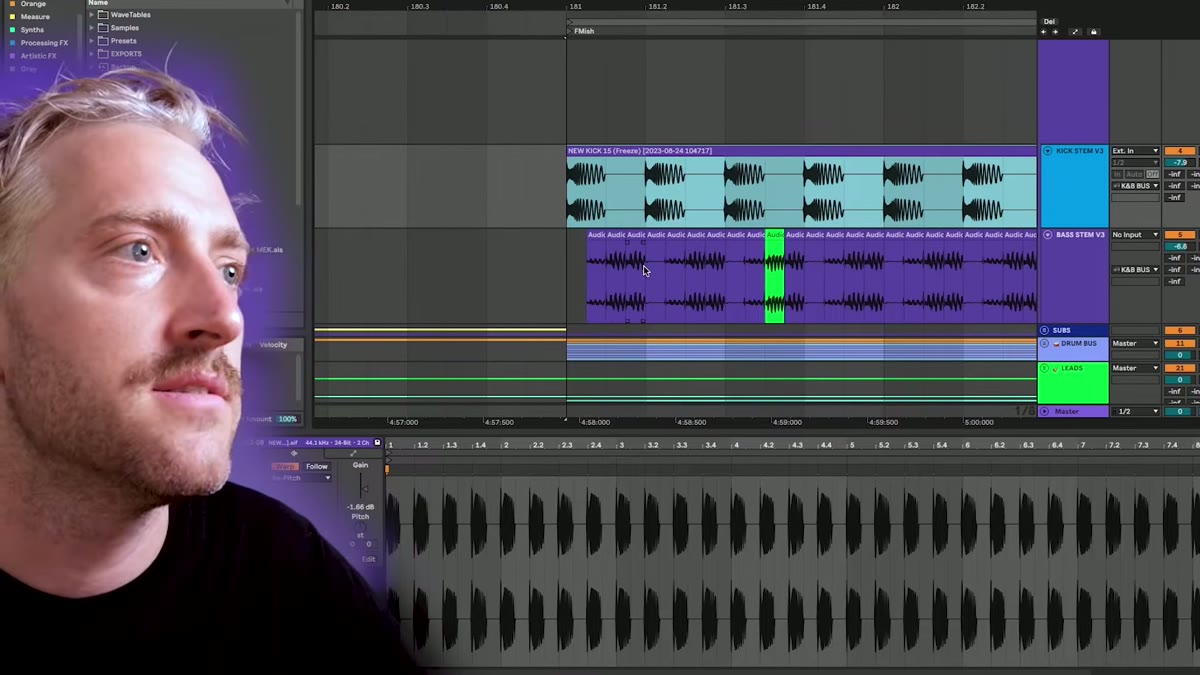
Every psytrance track is built on the kick and bass. Before you touch a melody, get those two locked: tuned to the same key, phase-aligned so the low end sums instead of cancelling, and grooving together. If the kick and bass do not feel good on their own, nothing you stack on top will save them.
Start the arrangement with 16 bars of just kick and bass. That is your foundation and your reference. Every element you add later gets judged against how it sits on top of this.
Rule 2 — Drums build the groove
▶ Play from 3:13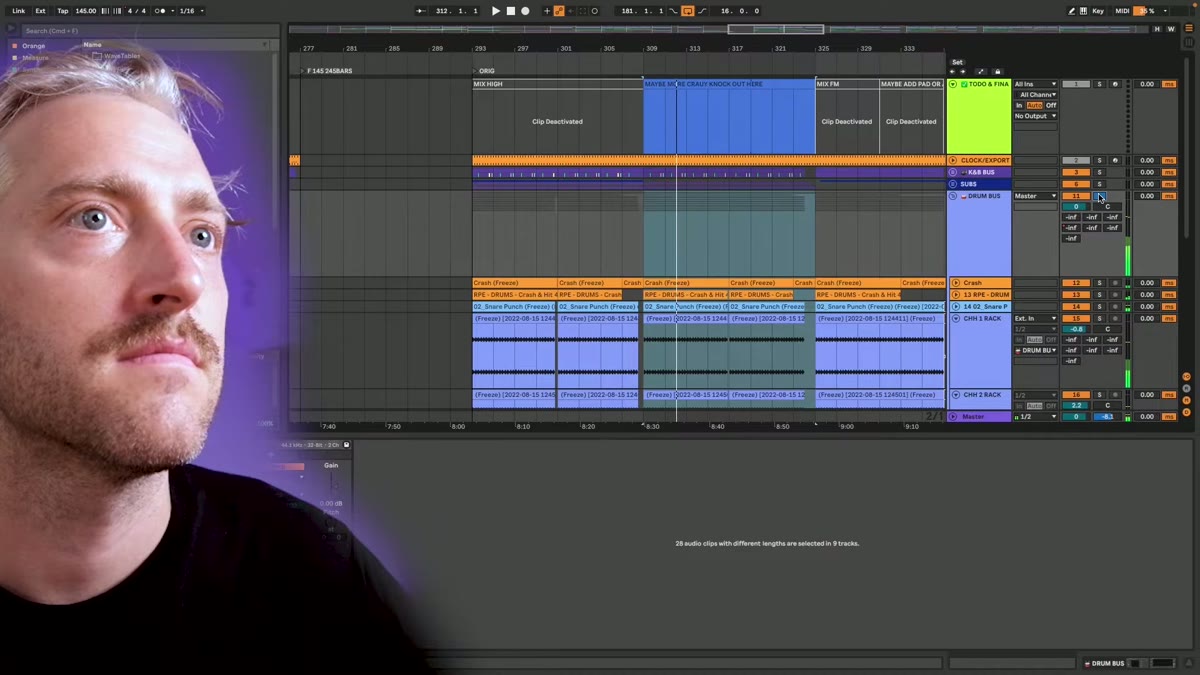
Once the kick and bass hold, the drums are what make people move. Closed hats come in around bar 17, the snare or clap around bar 33, then the open hat with a transition into the next section. Add them in layers, 8 or 16 bars at a time, never all at once.
The drums are also your main tool for groove. Placing an open hi hat between the kicks, on the offbeats, is what gives psytrance its rolling drive.
Rule 3 — Leads carry the energy
▶ Play from 5:03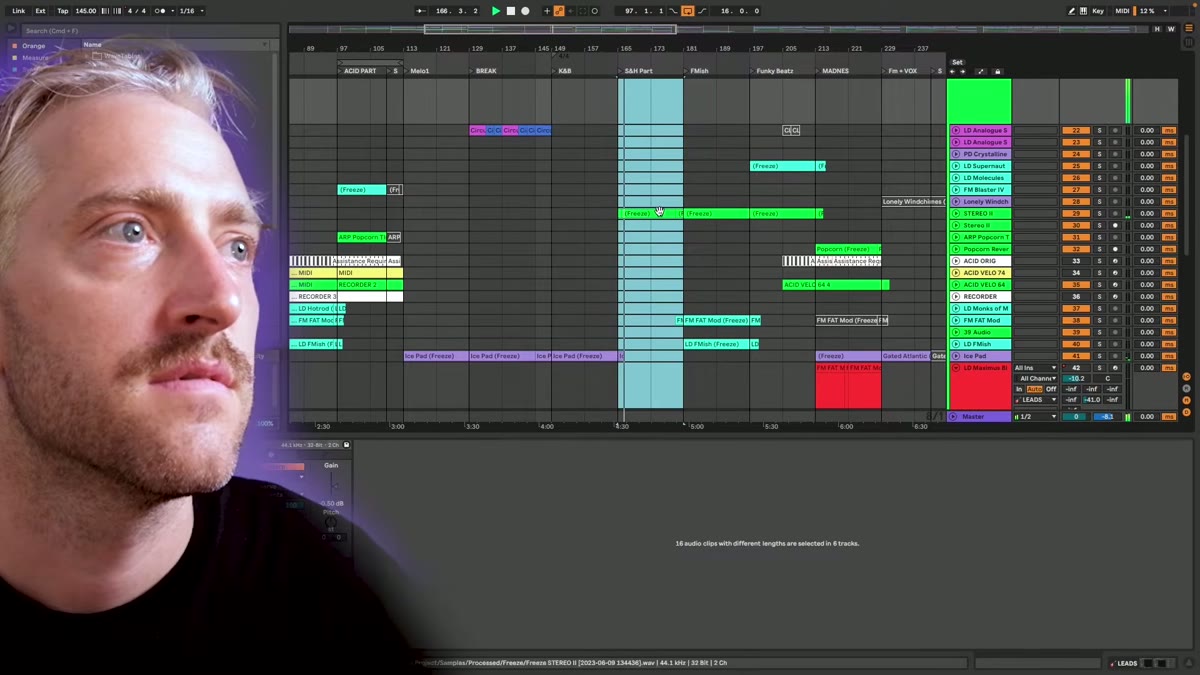
Leads give the track its identity, but they are also where energy is won or lost. A lead that does not add energy is costing you energy. Mute it and check: if the section feels better without it, cut it there and bring it back where it earns its place.
Introduce a lead before it fully drops, with delay or reverb a bar or two early, so the entry feels earned rather than abrupt.
Rule 4 — Mix as you arrange
▶ Play from 6:32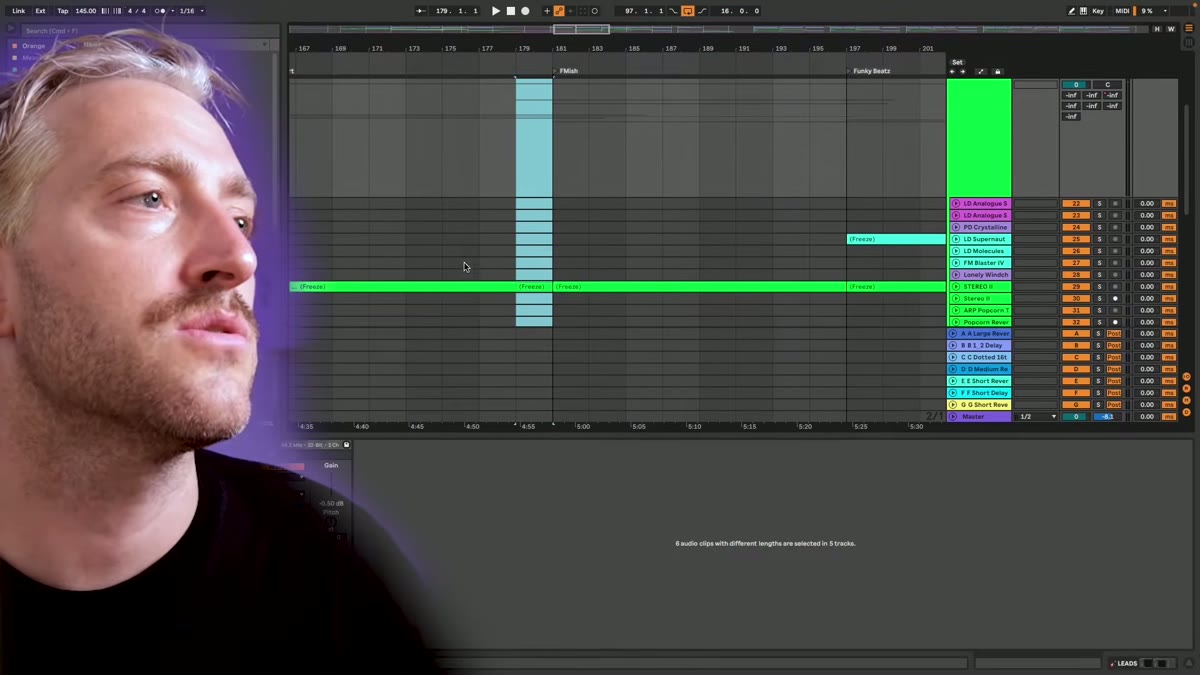
You do not arrange first and mix later. In psytrance the two happen together, because the arrangement decisions are mix decisions: how many elements play at once, where the low end sits, how much space the leads get.
Keep your levels in check as you build. When a section gets muddy, the fix is almost always fewer elements, not more processing.
Rule 5 — Pick the right scale
▶ Play from 9:11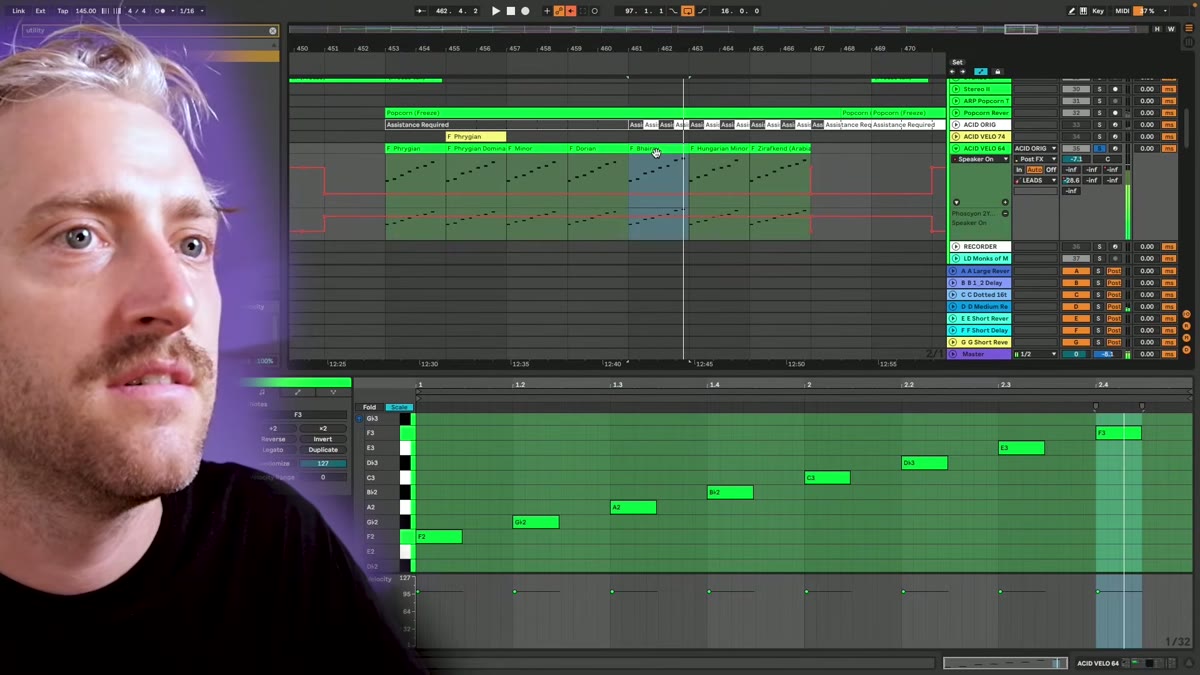
Key and scale set the mood of the whole track. Phrygian and minor are the psytrance staples: dark, tense and hypnotic. Pick your key at the start and write everything in it so your bass, leads and pads agree.
I personally avoid the very low and very high keys: C, C# and B. Higher keys like G# to A# add more drive, mid keys like F to G sound strong, and low keys like D to E are harder to mix but can add real depth to a track.
Rule 6 — Everything moves
▶ Play from 10:59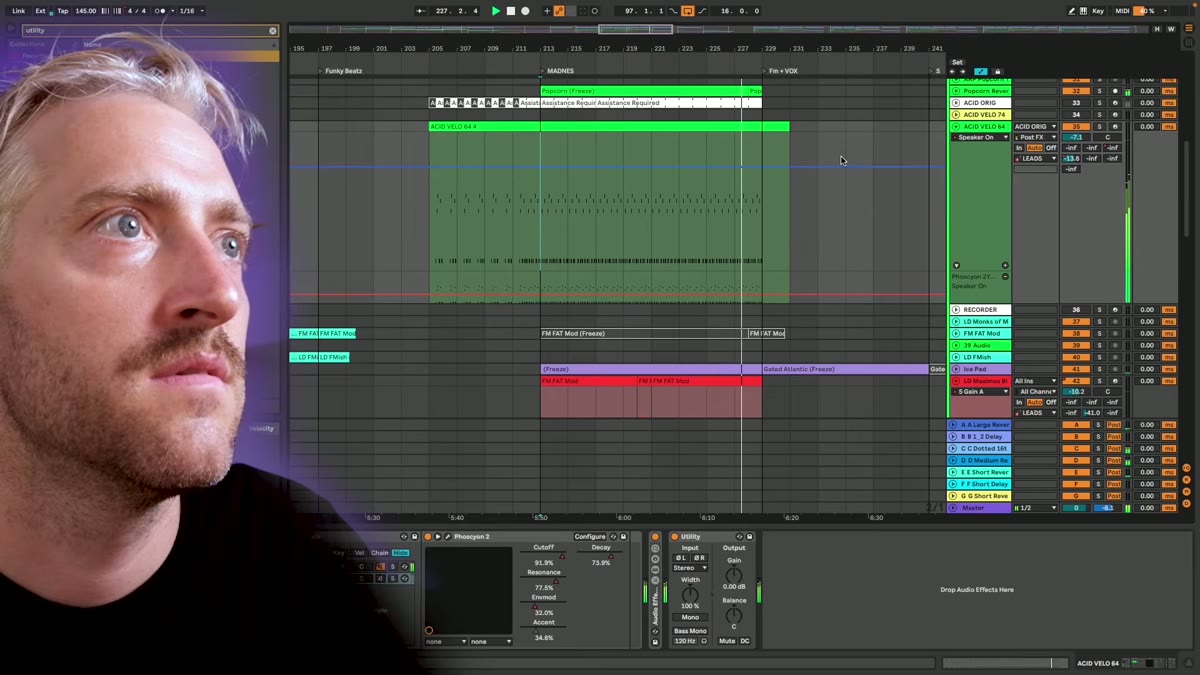
A static psytrance track is a boring one. Every sustained element wants some movement: a filter slowly opening, an LFO on the cutoff, automation creeping upward through a section. That constant motion is what keeps a repetitive, hypnotic genre from feeling flat.
The simplest version is a diagonal filter automation on a background lead, a straight line rising through 16 bars. You barely notice it, but it keeps the section breathing.
Rule 7 — Then break the rules
▶ Play from 12:17
Here is the last rule: the other six are guidelines, not a prison. Once you can hear why each one works, you will know when to break it. A track that follows every rule perfectly can still be lifeless, and one that breaks all of them can be the track everyone remembers.
Learn the structure first, so breaking it is a choice and not an accident. That is the whole difference.