Serum Trick: Sample-and-Hold From a Bell
Watch the full breakdown
A bell sample loaded into Serum granular can become a shimmering, moving texture, but the grain settings usually fight you. The trick that makes it lock in is using LFO retrigger with randomised octave and semitone modulation so the pitch breaks into something that actually moves.
In the video Psiger loads the bell, sets up the macros and sample-and-hold, then finishes it with delay for that crystal texture. Here is the workflow.
- Load a bell into Serum granular mode to chop it into re-pitchable grains.
- Set grain density and length for a smooth base before you modulate.
- Drive pitch with a sample-and-hold LFO and, crucially, enable retrigger with random octave and semitone.
- The retrigger and randomisation are the part most people skip. Without them the texture is flat.
- Finish with ping pong or short delay for the crystal, glassy tail.
The granular bell demo
▶ Play from 0:00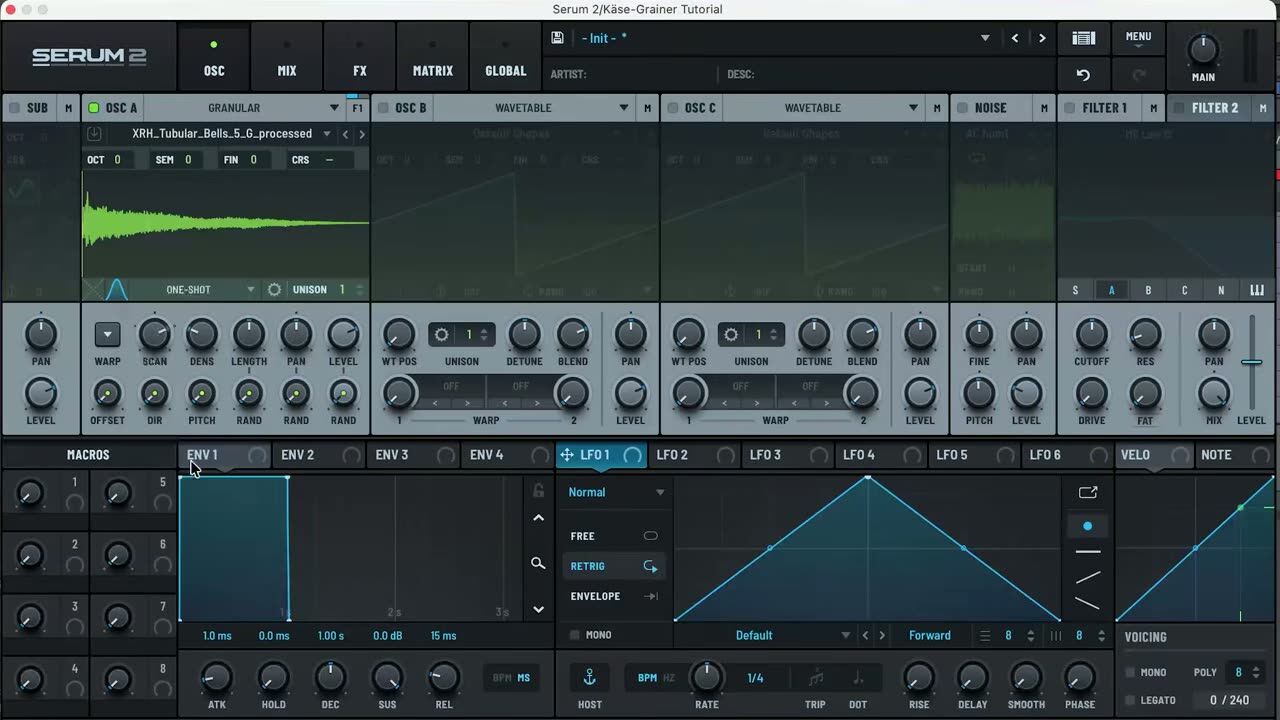
The end result is a bell that no longer sounds like a bell: a granular, pitched-out texture that crawls and shimmers. Hearing it first shows you how far a single sample can travel once granular and modulation get involved.
It is a great reminder that source material matters less than what you do to it.
Load the bell into Serum granular
▶ Play from 1:01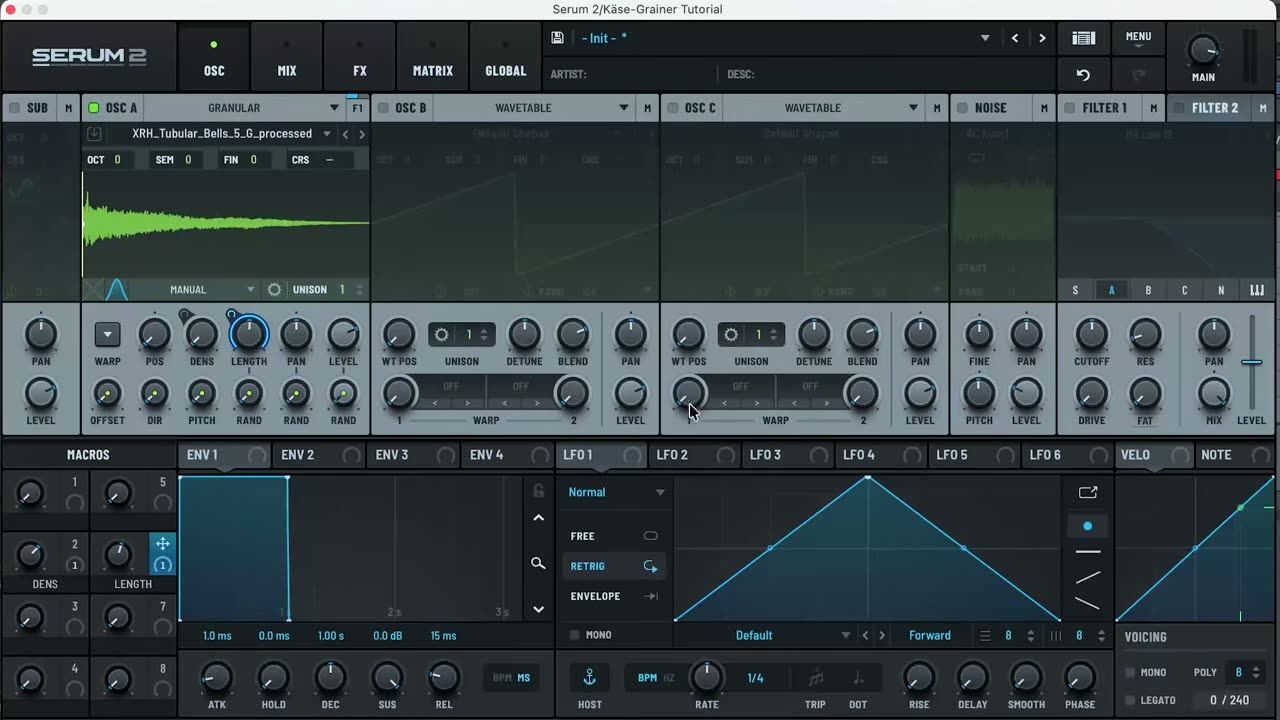
Drop the bell sample into Serum and switch the oscillator to granular mode. Granular chops the sample into tiny grains you can reposition, stretch and re-pitch, which is what lets you turn a static bell into an evolving texture.
Set grain density and length so the sound is smooth rather than gritty, then you have a stable base to modulate.
Macros and sample-and-hold modulation
▶ Play from 1:50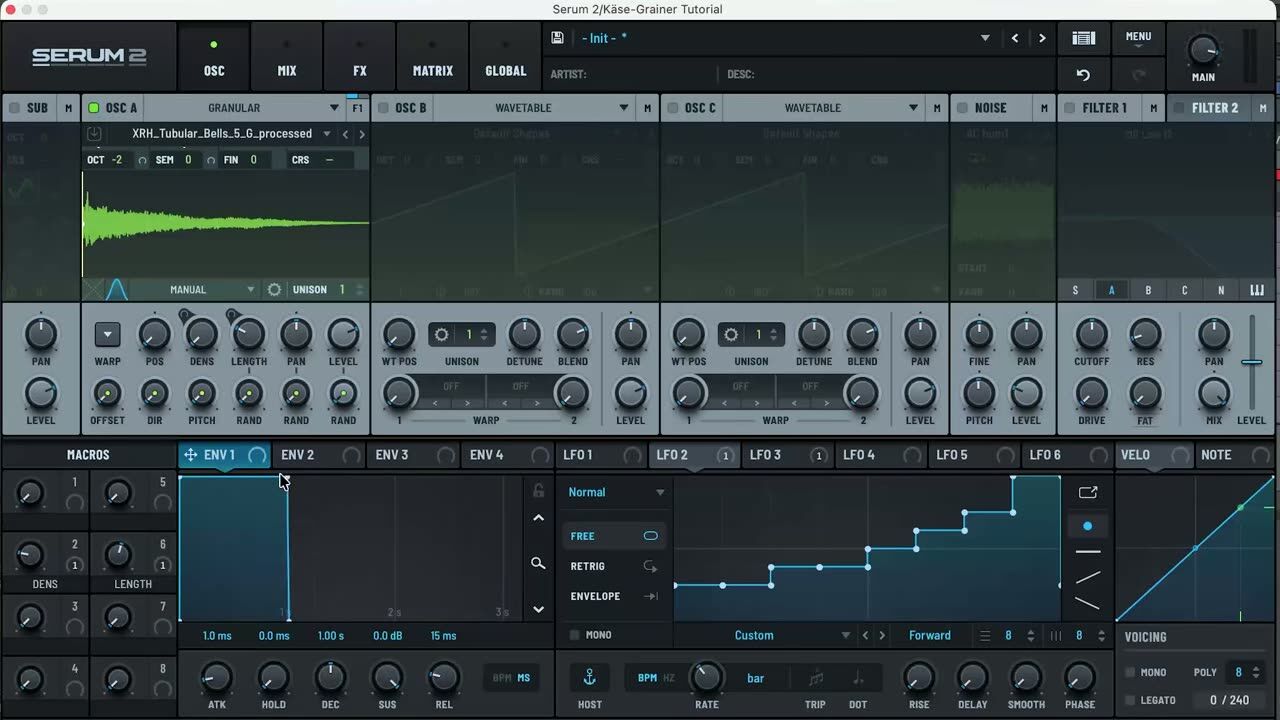
Assign macros to the grain and pitch parameters, then drive them with an LFO in sample-and-hold mode. The key detail is LFO retrigger with randomised octave and semitone, so each note grabs a fresh random pitch and the texture keeps surprising you.
This is where most people give up. Without the retrigger and randomisation the sound stays flat. With it, the bell breaks into constant movement.
Automate macros and add crystal delay
▶ Play from 6:08To finish, automate the macros over time so the texture evolves across a section, then add a ping pong or short millisecond delay for that crystal, glassy tail. A little vowel-style distortion can add character on top.
The delay is what turns a dry granular texture into something that feels wide and atmospheric.