Ableton Rack Sequencers for Psytrance
Watch the full breakdown
A step sequencer built into a rack turns Ableton into a jamming machine: program a pattern with pitch, velocity and rests, add randomisation, and generate leads, arps and glitch sequences on the fly.
In the video Psiger and Virtual Light walk through four custom Sequence Lab racks, each built around a step sequencer device. Here are the highlights.
- A step sequencer with per-step pitch, velocity, note length and rests sits at the core.
- Scale presets keep patterns in key while you experiment.
- Randomisation generates variations instantly; a locked root keeps it musical.
- Glitch lead chains use an LFO-controlled selector to morph between synths mid-pattern.
- A sample-based sequencer slices and re-triggers audio for creative glitch sampling.
The step sequencer and its controls
▶ Play from 0:00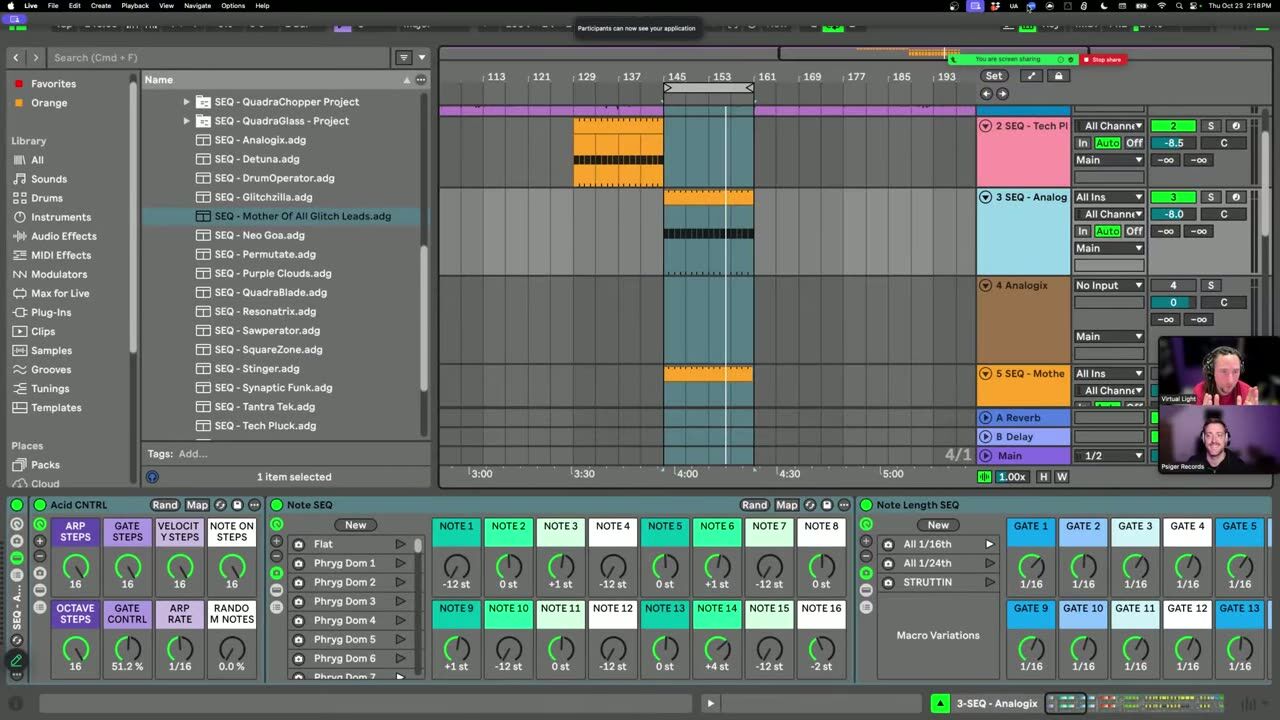
At the core is a step sequencer with per-step control over pitch, velocity, note length and rests, plus scale presets so your patterns stay in key. That gives you a full sequencing playground without leaving the rack.
Rest notes and note-length control are what let a sequence breathe rather than machine-gun every step.
Randomisation with a stable root
▶ Play from 3:00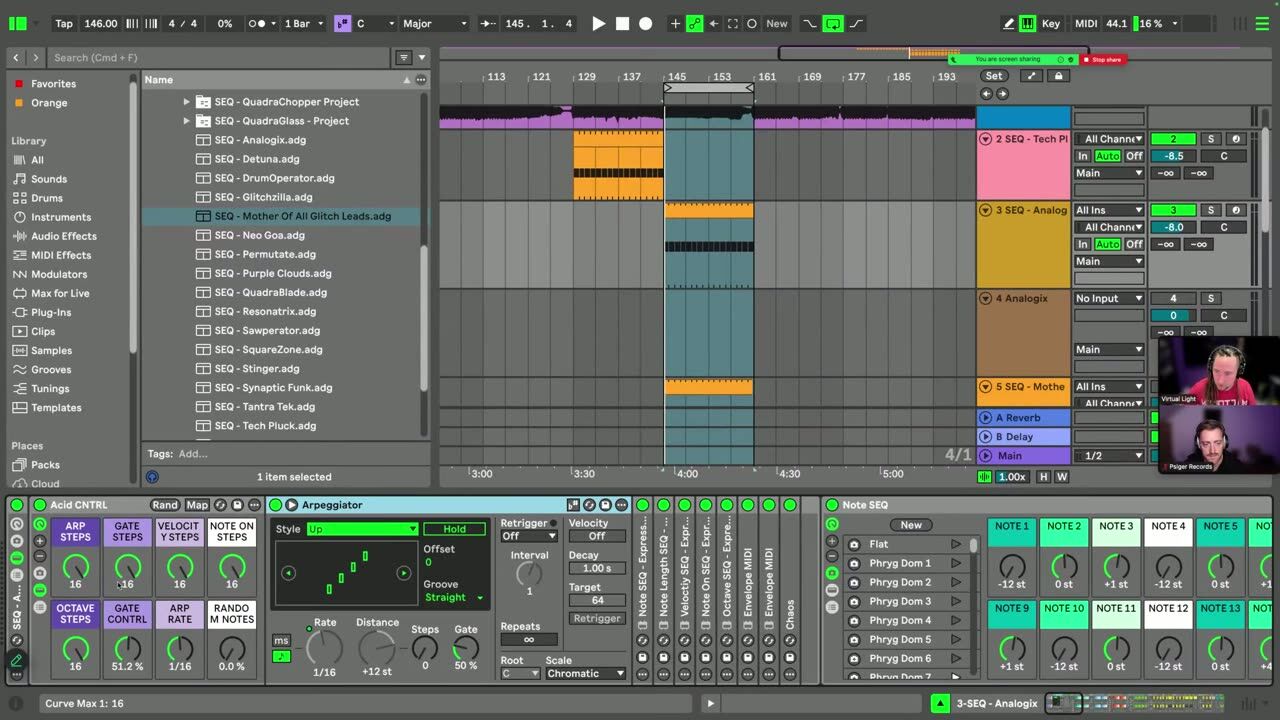
Randomisation generates fresh pattern variations instantly, and locking the root note keeps everything musical even as the steps change. This is the fastest way to escape a blank page: randomise, keep what works, tweak the rest.
A stable root means random never turns into wrong-key chaos.
Glitch leads and FM arpeggiators
▶ Play from 6:00Beyond basic sequencing, the racks include multi-synth glitch lead chains and rhythmic FM arpeggiators. An LFO-controlled chain selector switches between synths mid-pattern for glitchy, morphing leads, and FM arps add complex rhythmic movement.
These are the racks you reach for when you want a lead that constantly surprises.
Sample-based sequencing and glitch FX
▶ Play from 9:00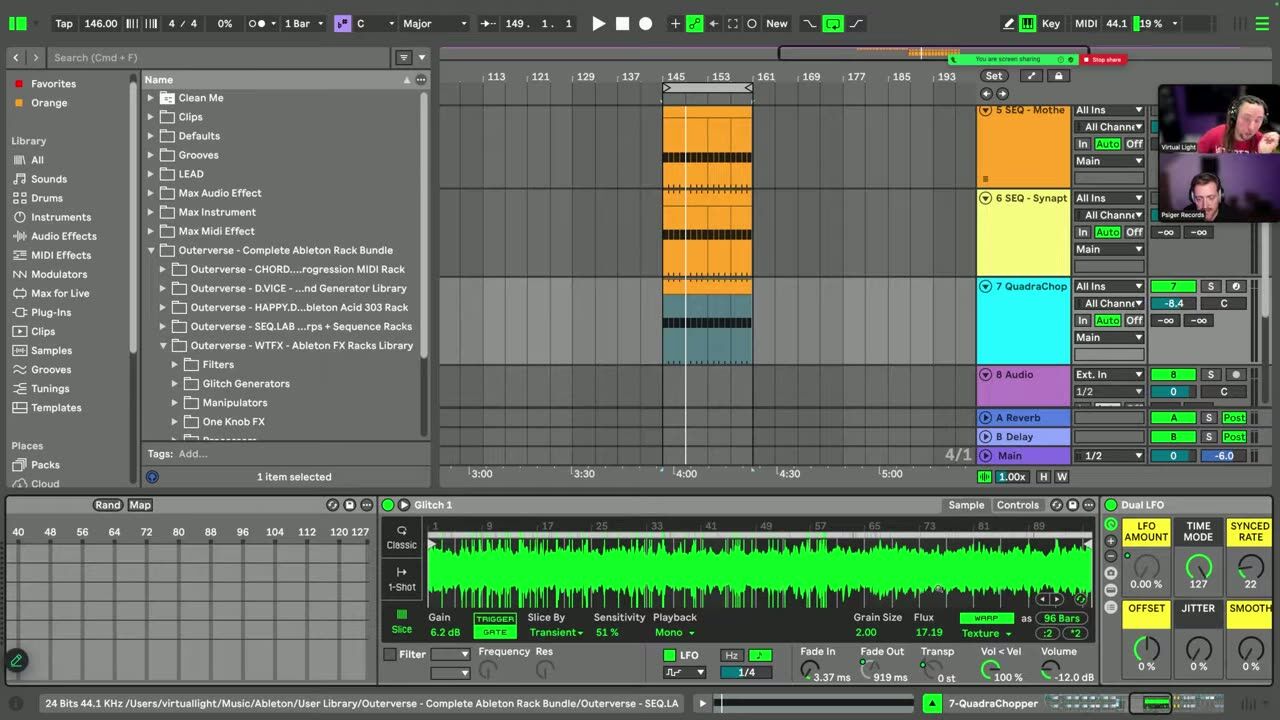
A sample-based sequencer slices and re-triggers audio with random slicing, grain and flux controls, plus Max for Live automation. That opens up creative glitch sampling: turn any loop into an evolving, chopped sequence.
Recording and jamming these racks live is where the best happy accidents come from.