Psytrance Bass With Ableton Operator
Watch the full breakdown
You do not need a third-party synth to make a great psytrance bass. Ableton stock Operator does the job: pick a wave, program a tight offbeat pattern, and shape the tone with the filter. It is a reminder that the technique matters more than the plugin.
In the video Psiger builds a psytrance bass entirely in Operator. Here are the steps.
- Ableton stock Operator can make a full psytrance bass, no third-party synth needed.
- Choose a harmonically rich wave so the filter has something to shape.
- Program a tight offbeat pattern locked to the grid so bass and kick share the low end.
- The filter defines the bass character, so spend your time there.
- Use velocity and envelope tweaks to add dynamics and groove.
Select a wave
▶ Play from 1:08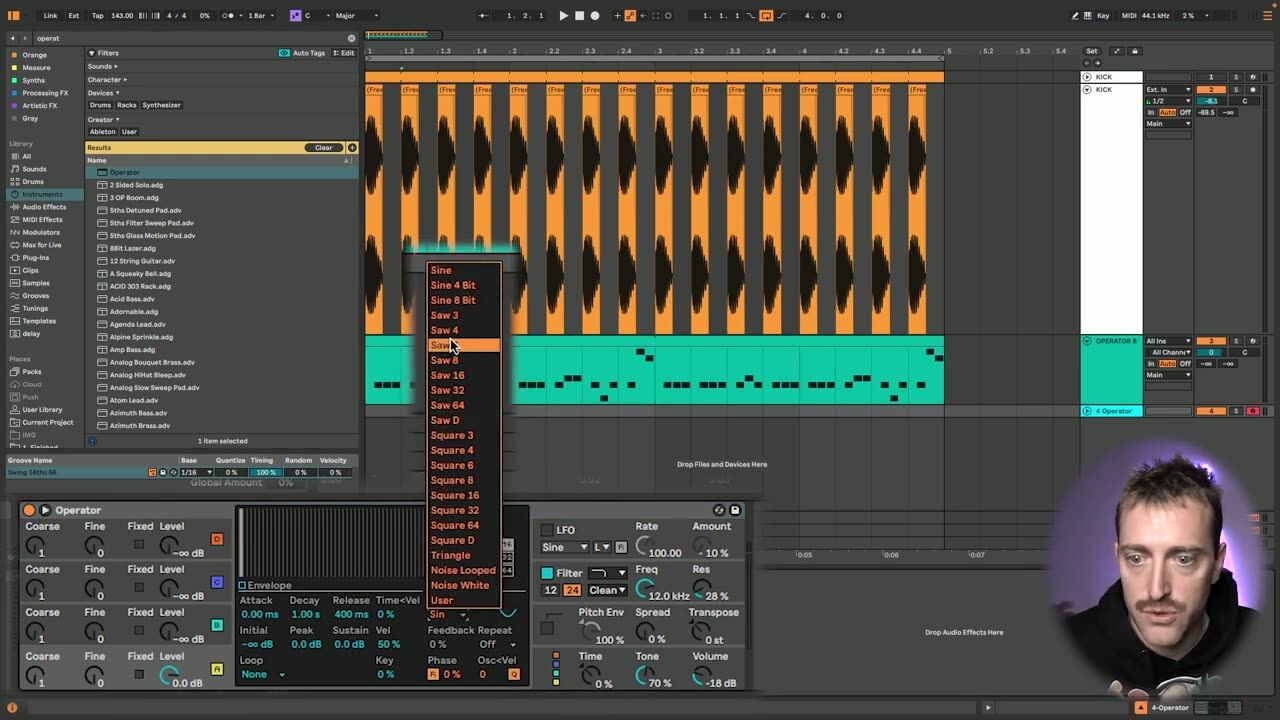
Start by choosing an oscillator wave in Operator that gives you a rich low end, usually a saw or a wave with plenty of harmonics for the filter to work on. The raw wave is the foundation of the bass tone.
A harmonically rich wave gives the filter something to shape. A thin wave leaves you with a thin bass.
Program the MIDI
▶ Play from 1:56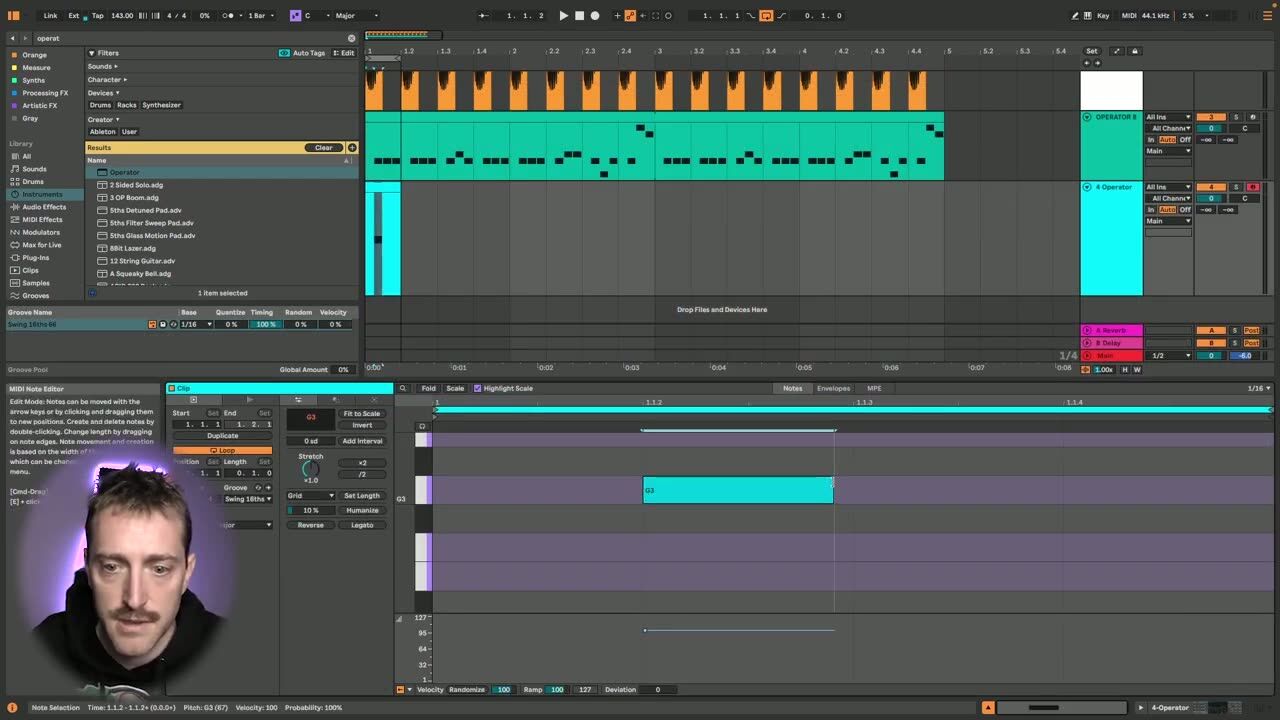
Write a tight offbeat bass pattern, the notes hitting between the kicks that define the psytrance groove. Keep it locked to the grid so the bass and kick share the low end cleanly.
The MIDI pattern is where the groove lives, so get it feeling right before shaping the sound.
Shape the tone with the filter
▶ Play from 3:39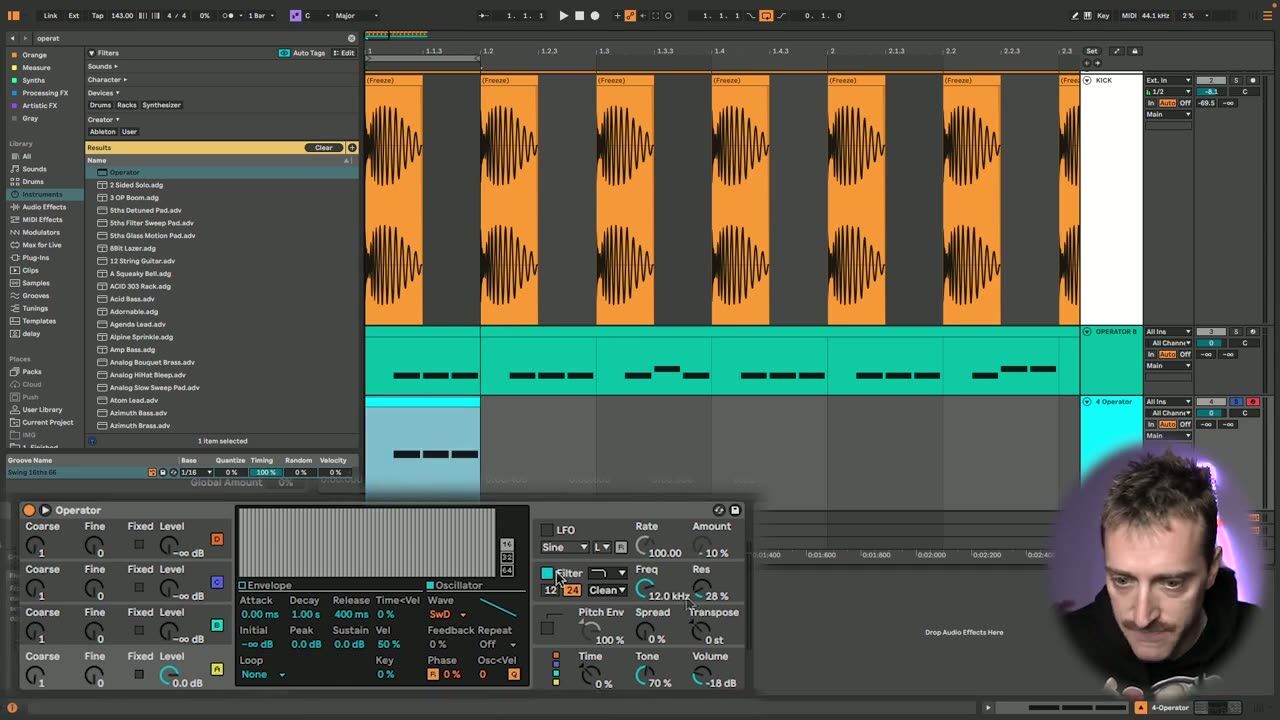
The filter defines the bass character. A low-pass filter with some resonance and movement carves the tone from dull to punchy. Automate or modulate the cutoff for life, and set the filter so the bass sits under the kick without clashing.
Most of the bass character comes from the filter, so spend your time here.
Velocity and refining the patch
▶ Play from 7:17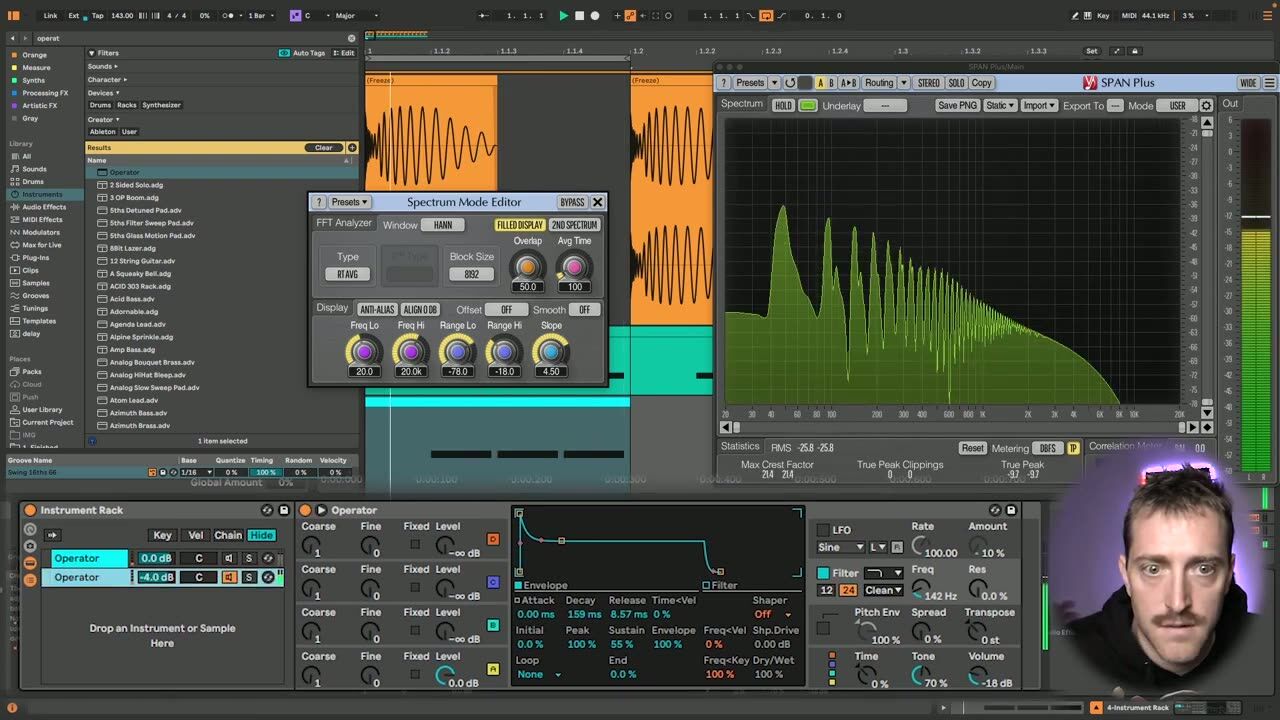
Use velocity to add dynamics so the bass is not a flat, even pattern, then refine the patch, tightening the envelope, adjusting the filter, cleaning the low end. These finishing touches turn a functional bass into one with groove and movement.
Small variations in velocity and envelope are what make the bass feel alive.