Jam With Virtual Light: Wavetable Design
Watch the full breakdown
With melodies flowing from part one, this session turns to sound design. Psiger and Virtual Light dig into wavetable synthesis in Serum 2, building leads and textures and shaping them as they go.
Watching sound design happen live, with the reasoning out loud, teaches more than a finished preset ever could. Here are the takeaways.
- A wavetable is a set of waveforms you sweep through; position changes the harmonics.
- Moving through the table finds the raw tone for a lead or texture.
- Filters, envelopes and modulation turn one wavetable into many different sounds.
- Much of a sound character comes from processing, not the source.
- Live shaping, adding movement and reacting in context, is how a rough patch becomes finished.
Working with wavetables
▶ Play from 0:00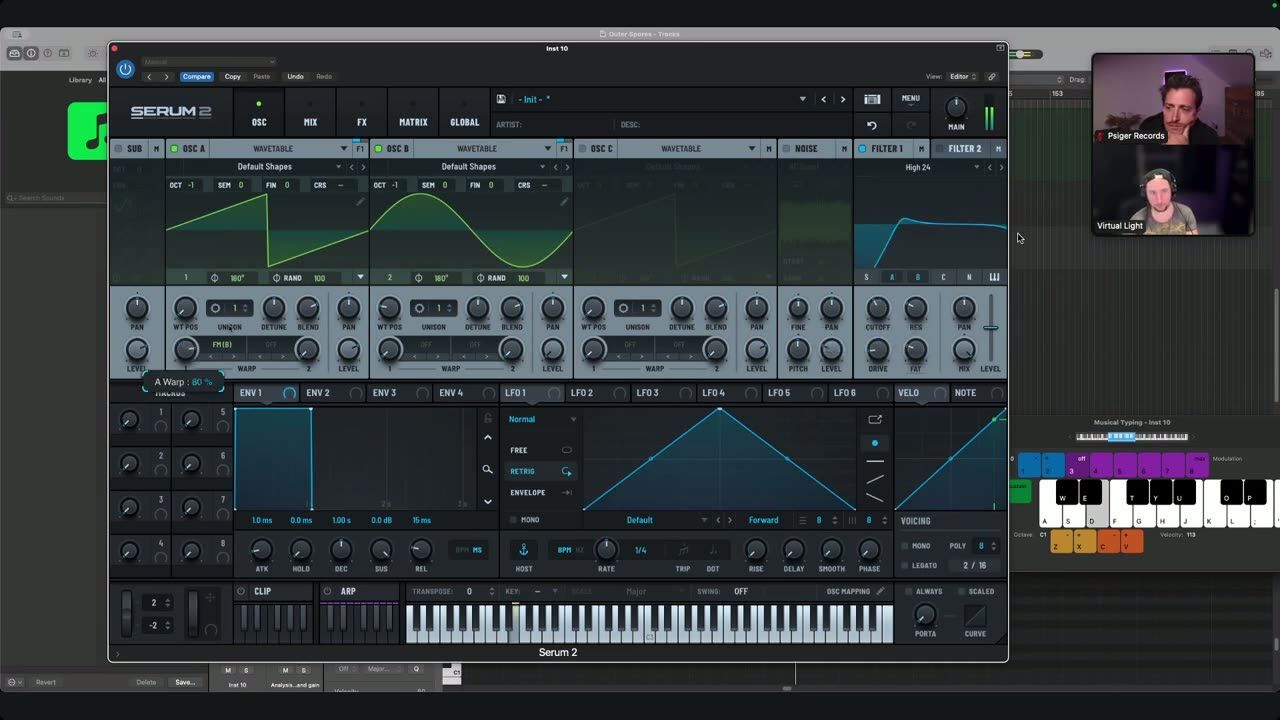
A wavetable is a set of waveforms you sweep through, and moving the position changes the harmonic content. The session shows how to pick and move through a table to find the raw tone for a lead or texture.
Understanding the wavetable position as a sound design control is the foundation of everything that follows.
Building leads and textures
▶ Play from 10:00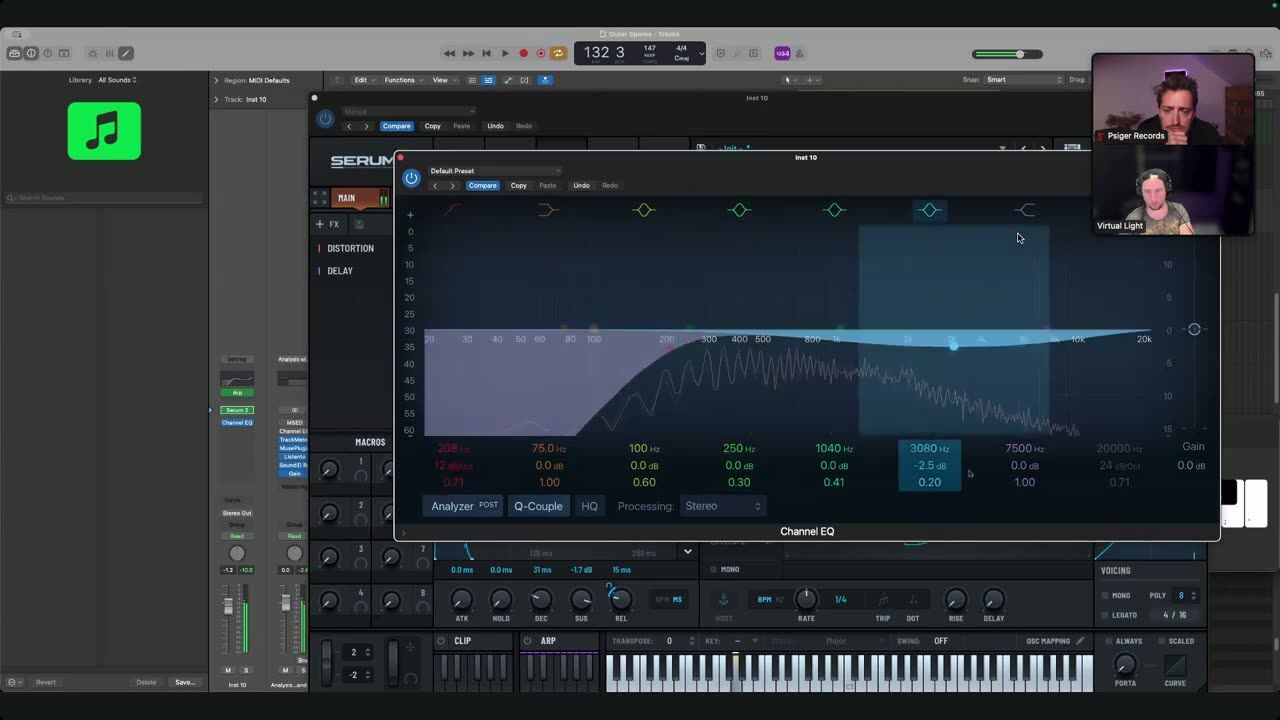
From the raw wavetable, they build leads and textures using filters, envelopes and modulation. The same table can become a sharp lead or a soft texture depending on how it is filtered and shaped, which shows how much character comes from processing rather than the source.
One wavetable is a starting point for many different sounds.
Shaping the sound live
▶ Play from 25:00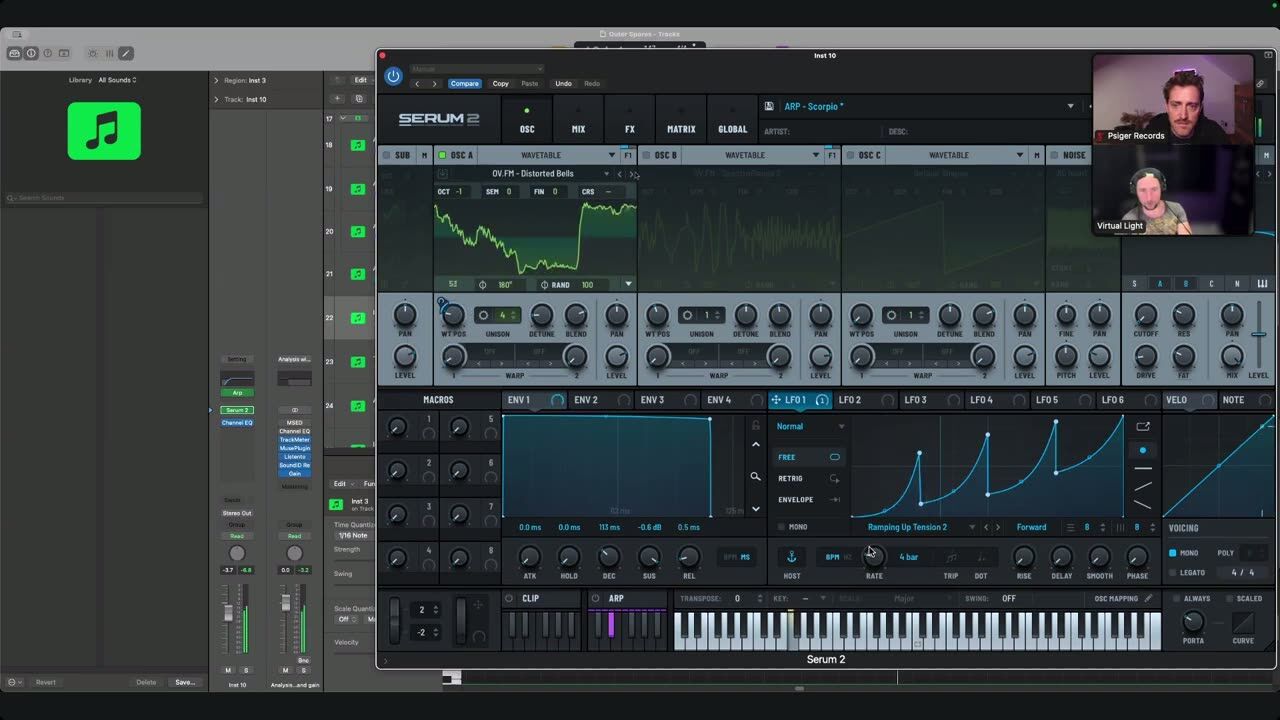
The value of the jam is seeing the sound refined in real time: adding movement, tweaking the filter, and reacting to how it sits in the track. That live shaping is how a rough patch becomes a finished sound.
Sound design is iterative, and watching the iteration is the lesson.