6 Ways to Make Gritty FM in Serum 2
Watch the full breakdown
Gritty FM is harder than it looks because phase distortion, wave folding, ring modulation and the various FM modes all behave differently, and most tutorials show you only one. The choice between them is what separates a muddy FM bass from a tight, aggressive one.
In the video Psiger runs through six ways to get grit in Serum 2 and says which he reaches for. Here they are, in order.
- The FM method you choose decides whether the sound is muddy or tight. Pick deliberately.
- Phase distortion is the least controllable. Know it, but reach for others.
- Wave folding gives controllable, evolving grit you can automate.
- Ring modulation adds metallic overtones. The carrier-to-modulator interval is a real parameter.
- FM from the sub gives deep grit with body. Control the depth so it does not eat the fundamental.
- Shape the filter curve on the output to keep grit where you want it. Widen with unison, not sub detune.
Phase distortion FM
▶ Play from 0:08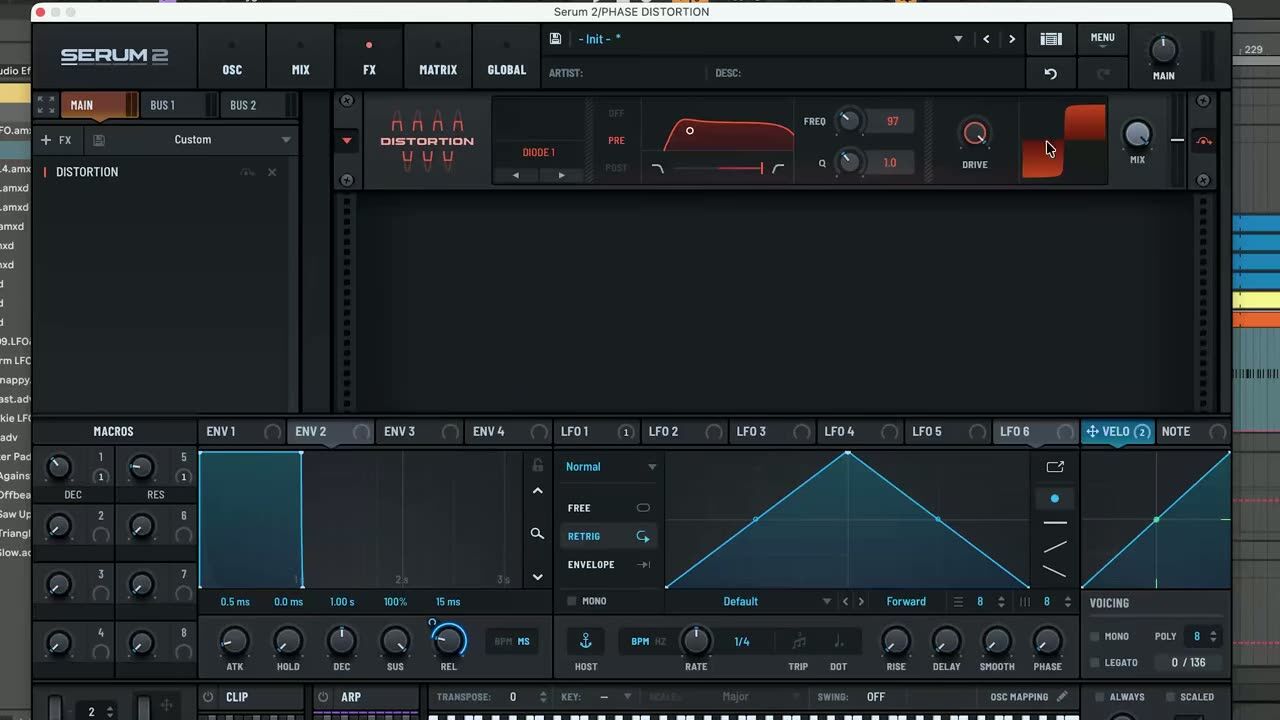
Phase distortion warps the shape of the wave to add harmonics. Psiger calls this his least favourite because it is the least controllable of the methods, but it is worth knowing what it sounds like so you can recognise when it is the wrong tool.
Useful as a comparison point for the methods that follow.
Wave folding FM
▶ Play from 2:01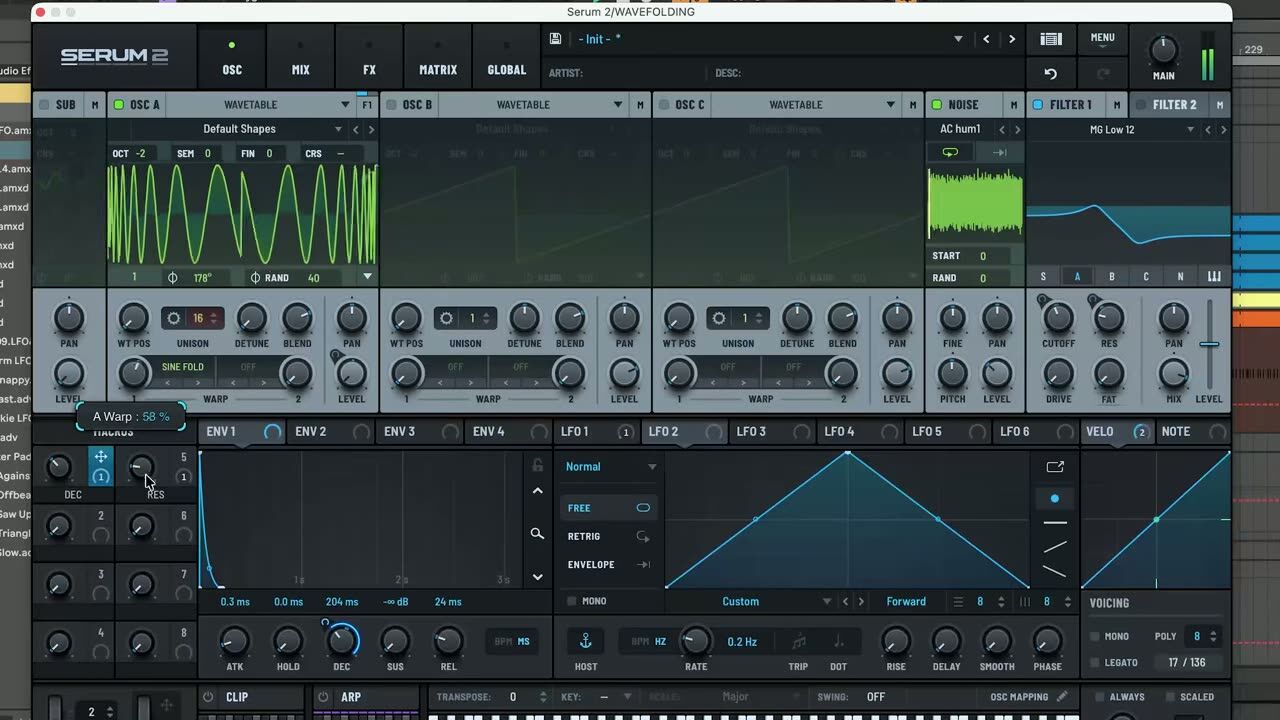
Wave folding folds the peaks of the waveform back on themselves, generating rich harmonics that get grittier as you push it. It responds musically to modulation, so you can automate the fold amount for movement.
A strong choice when you want controllable, evolving grit rather than a static distortion.
Ring modulation FM
▶ Play from 2:55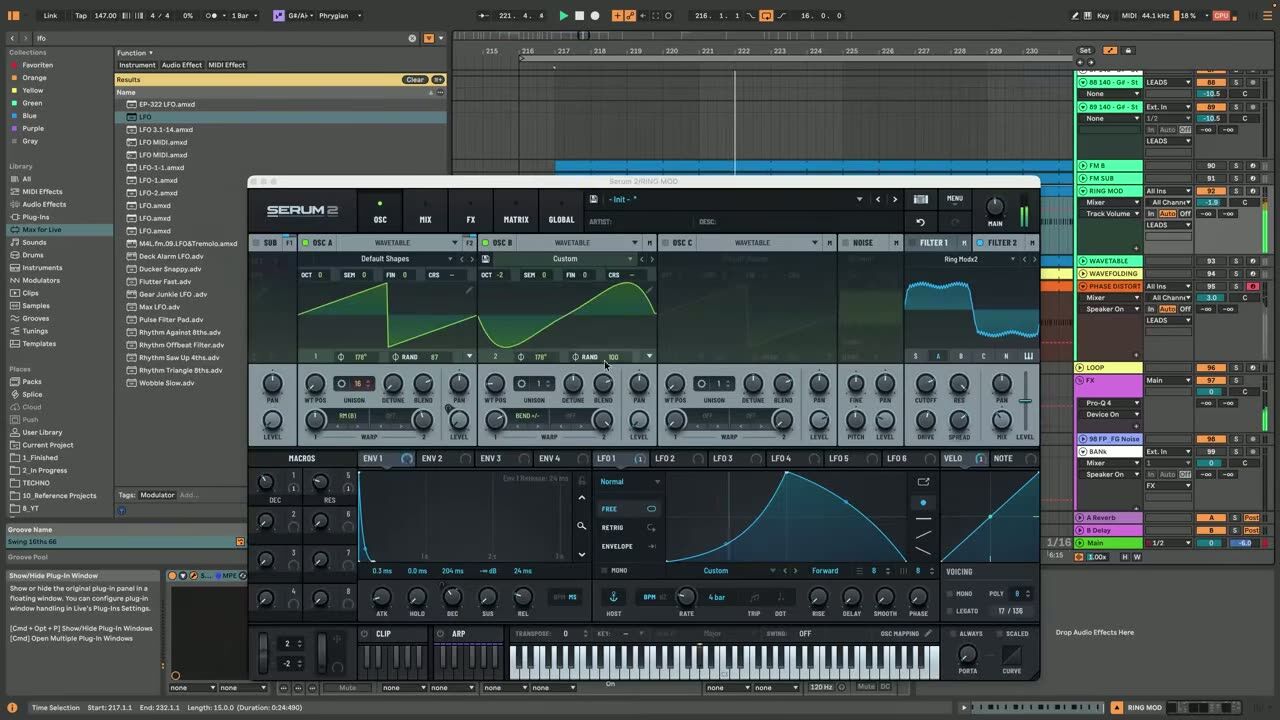
Ring modulation multiplies two signals together to create metallic, clangy overtones. The tuning of the modulator relative to the carrier decides whether it sounds musical or dissonant, so treat the interval as a real parameter.
Great for aggressive, inharmonic textures that cut through a busy full-on section.
FM from the sub
▶ Play from 4:47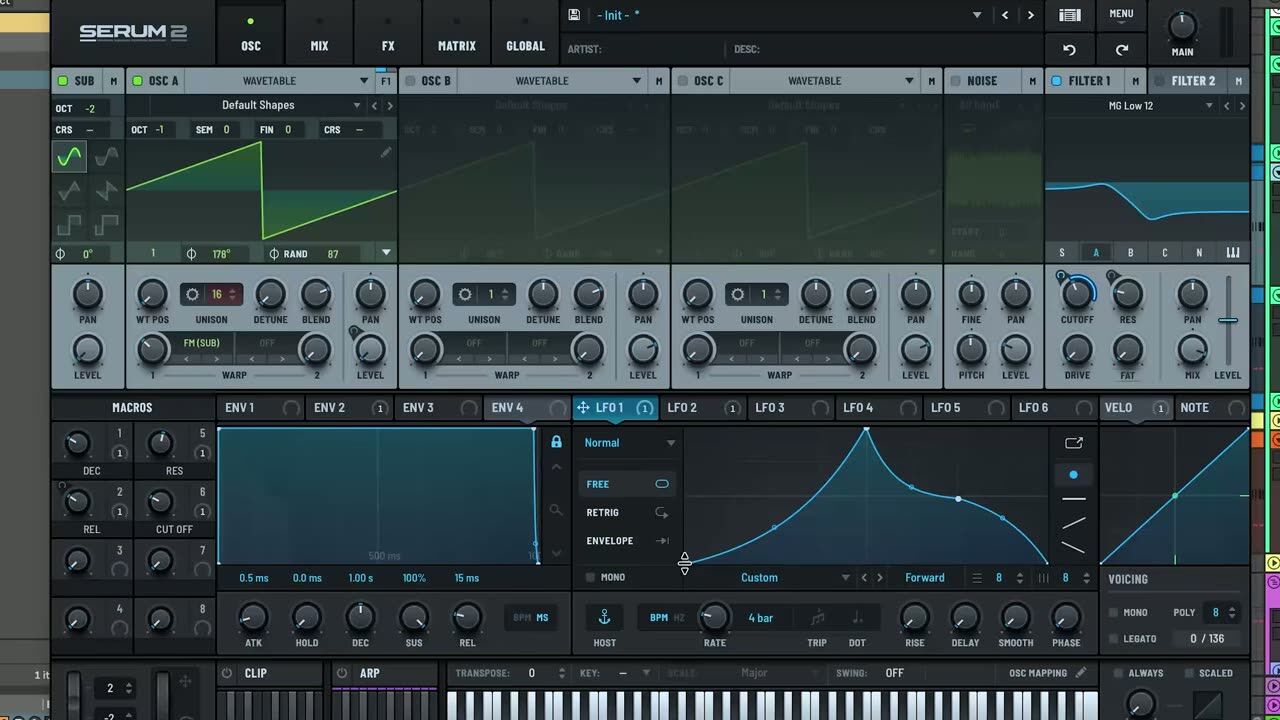
Using the sub oscillator as the modulator gives you deep, controllable FM grit with a solid low end. Because the modulator sits low, you get body and weight along with the harmonics, which suits full-on bass.
Control the FM depth carefully here so the grit adds character without eating the fundamental.
Filter modulation shaping trick
▶ Play from 5:36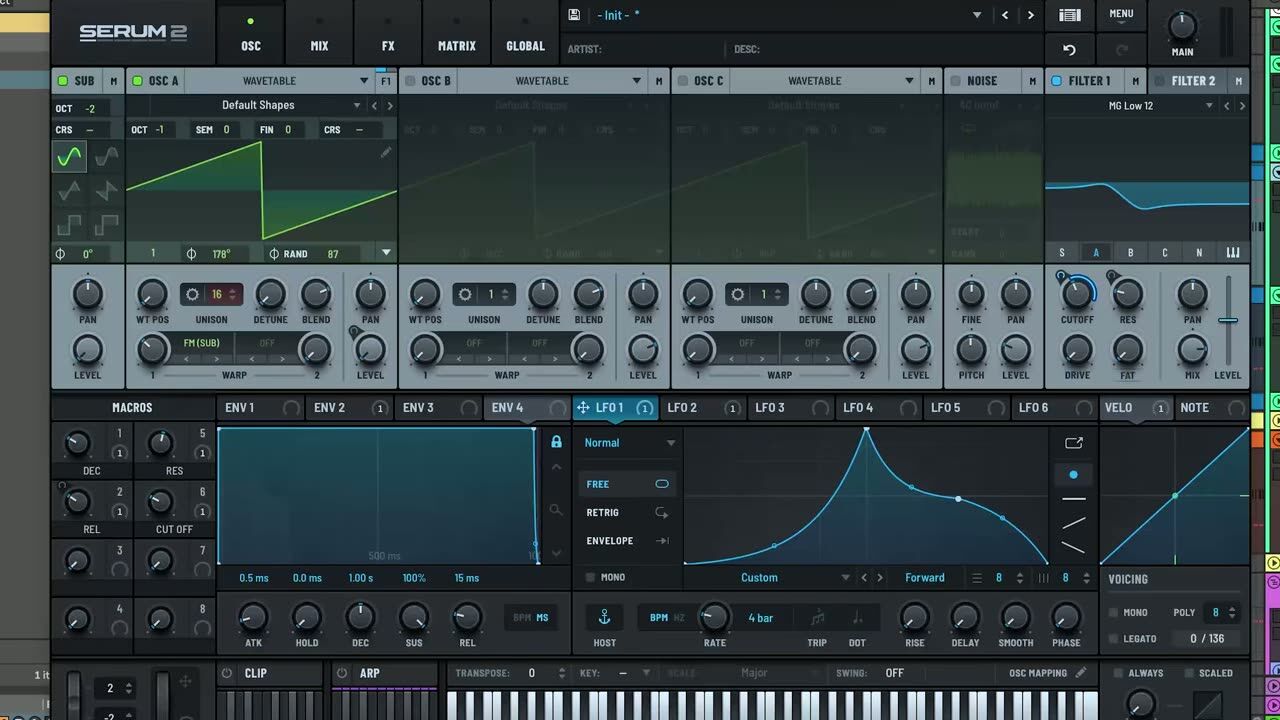
Shaping the filter curve on the FM output tames or emphasises specific frequency ranges. This is how you turn a harsh, uncontrolled FM sound into one with a defined character, keeping the grit where you want it and cutting it where it hurts the mix.
The shaping step is what makes any of these methods usable in a real track.
FM with oscillator B and wavetable FM
▶ Play from 7:20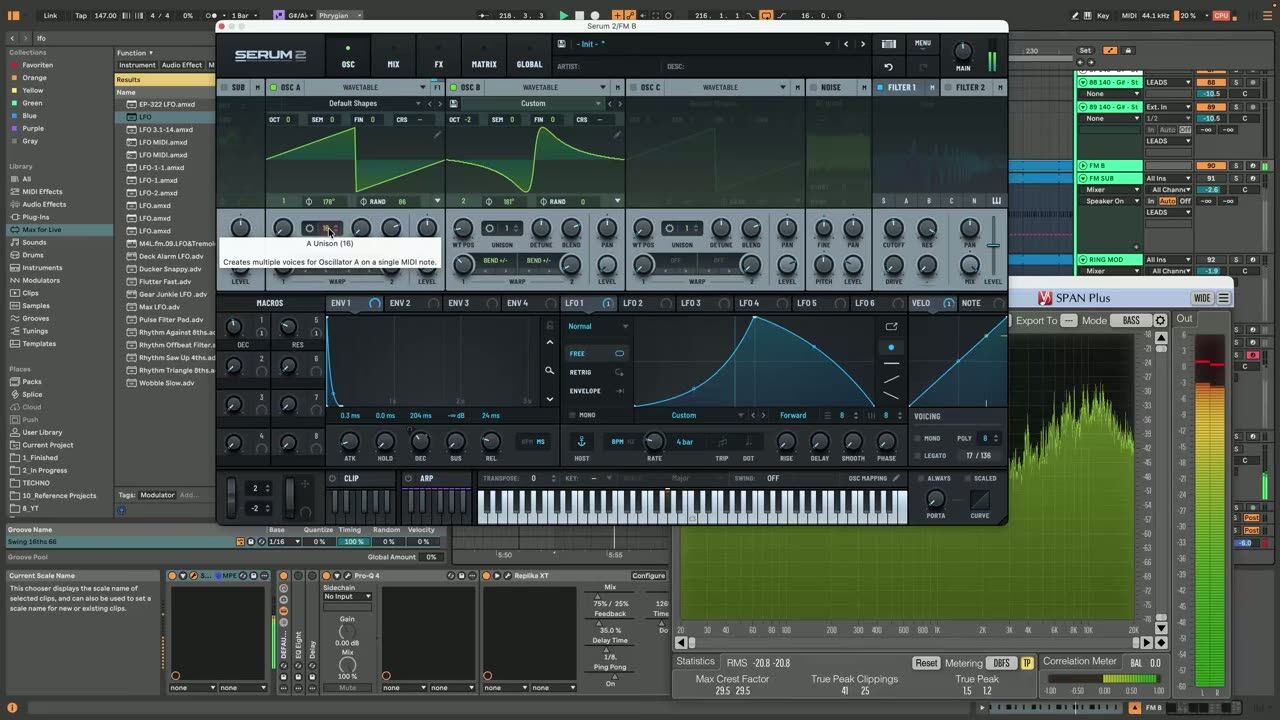
Using oscillator B as the modulator, and Serum 2 wavetable FM baked in, give you two more flavours of grit. Wavetable FM in particular lets the harmonic content evolve as you move through the table. A final tip: widen with unison rather than detune to avoid muddying the low end.
Between these six you have a toolbox, so pick the method that matches the grit you actually need.