How to Make a Goa 303 Acid Lead
Watch the full breakdown
A classic Goa 303 acid lead always feels close but never quite right until you know which envelope is doing the work. Most people crank the filter and stop there, but the pluck character comes from routing a mod envelope to the cutoff, not the amp envelope. That detail gets skipped constantly.
In the video Psiger builds the sound from a saw wave and walks through the routing, the glide and detune that give the old-school vibe, and the mixing chain that finishes it. Here it is step by step.
- A Goa 303 lead is a saw through a resonant low-pass filter, same DNA as a 303.
- The pluck comes from a mod envelope routed to cutoff, separate from the amp envelope. This is the missed step.
- Keep the mod envelope fast so the filter snaps open and shut on each note.
- Accent notes so the cutoff opens further on them, giving the line bounce.
- A little glide and detune adds the vintage old-school feel. Do not overdo it.
- Finish with OTT, delay and reverb so the lead sits in the mix.
Intro and demo
▶ Play from 0:00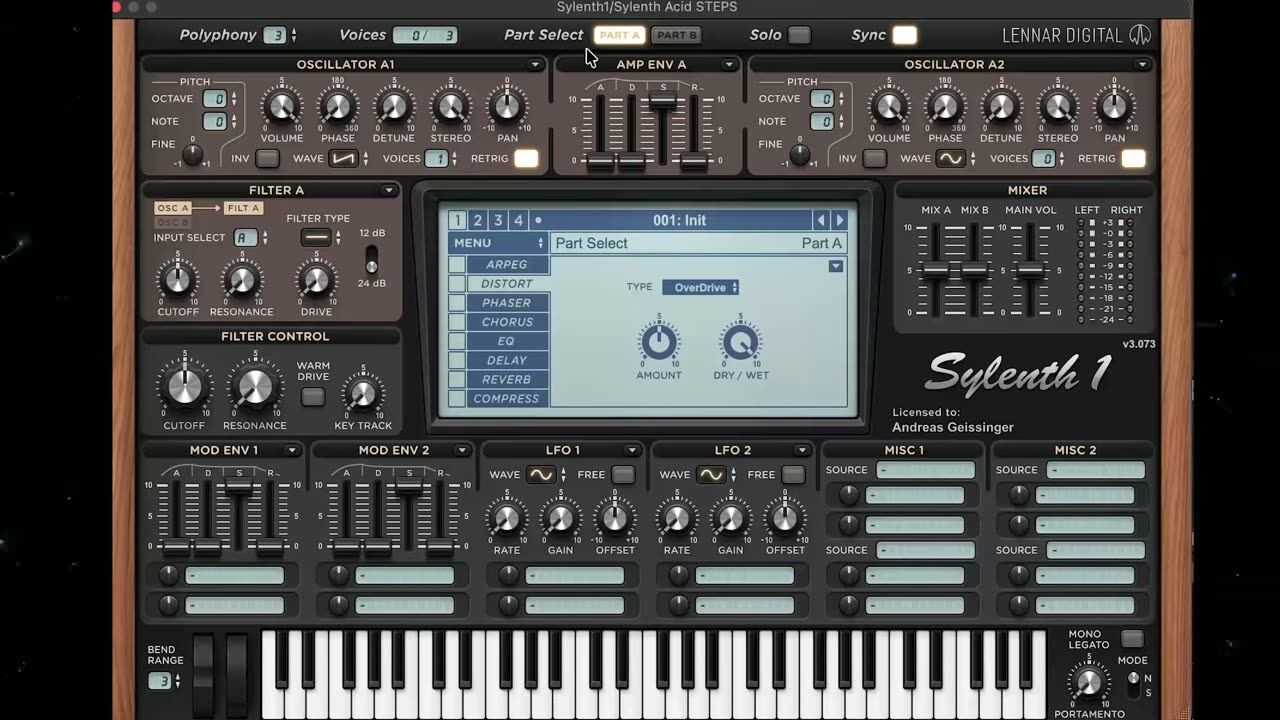
The target is the resonant, plucky acid lead heard all over Goa and old-school psytrance. Hear it first so you know the pluck and squelch you are building toward.
It starts from a plain saw wave. Everything that makes it interesting is in the filter and its envelope.
The Goa 303 concept
▶ Play from 0:28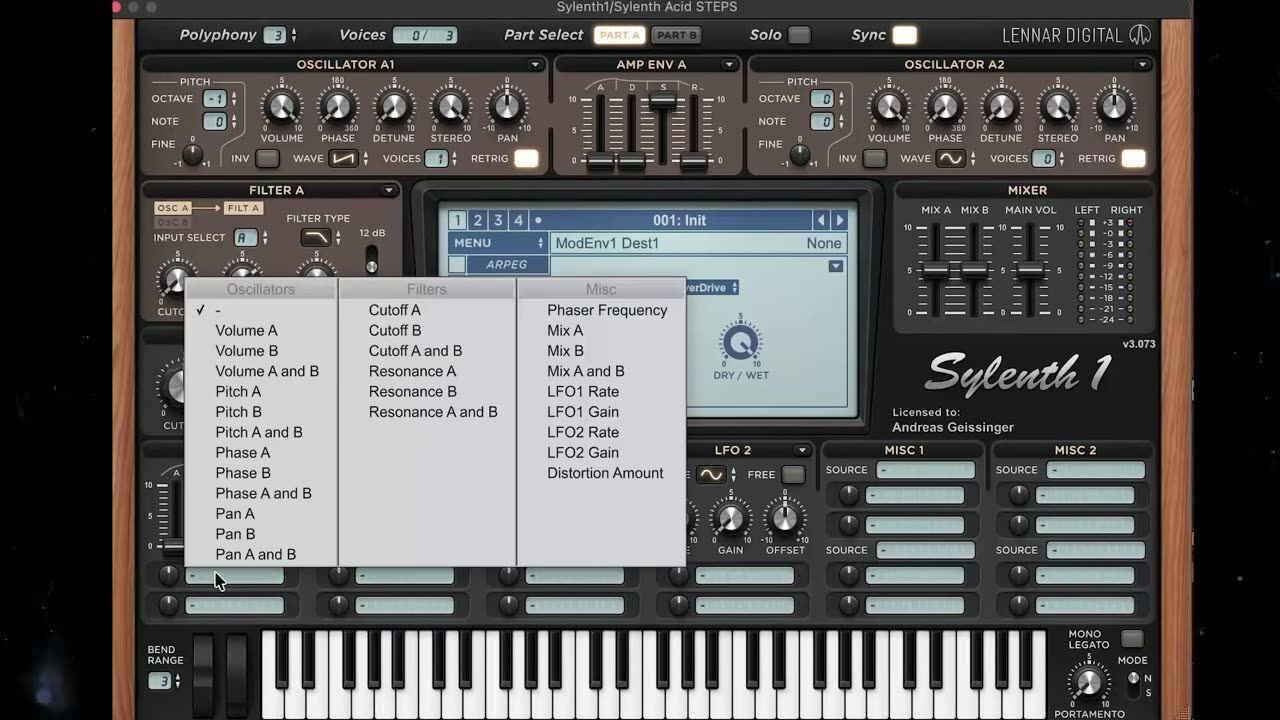
The concept is a saw through a resonant low-pass filter, with the filter moving on each note to create the acid squelch. That is the same DNA as a 303. The Goa flavour comes from how you glide and detune it, which the later chapters cover.
Get the core acid engine right first, then add the old-school character on top.
Mod envelope to cutoff routing
▶ Play from 0:46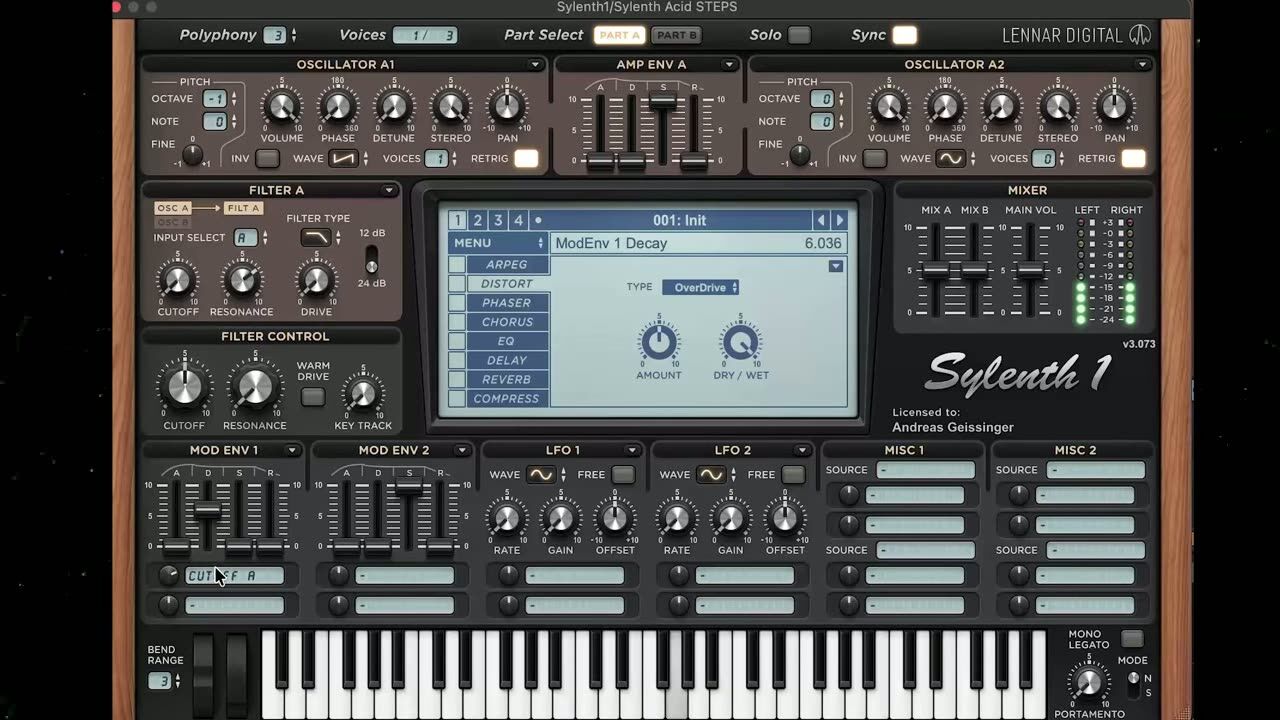
This is the part everyone misses. Route a dedicated mod envelope to the filter cutoff, separate from the amp envelope. The amp envelope shapes volume, but the pluck and the per-note filter snap come from the mod envelope opening and closing the cutoff.
Keep the mod envelope fast so the filter snaps open at the start of each note and closes quickly. That snap is the pluck.
Accent and cutoff movement
▶ Play from 2:12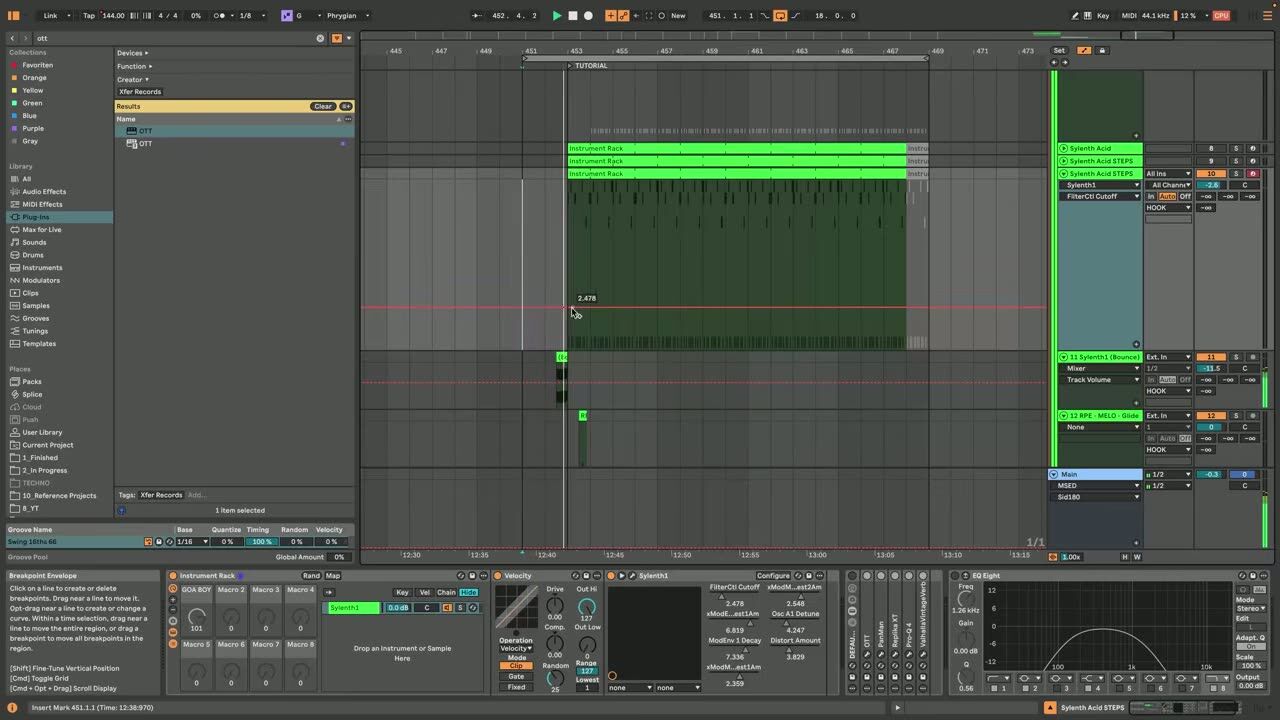
Vary how far the cutoff opens across notes so the line breathes instead of repeating flatly. Accented notes open the filter further and jump out, which gives the pattern its bounce and rhythm.
This accenting is what separates a lively acid line from a monotone one.
Glide and detune for the old-school feel
▶ Play from 5:02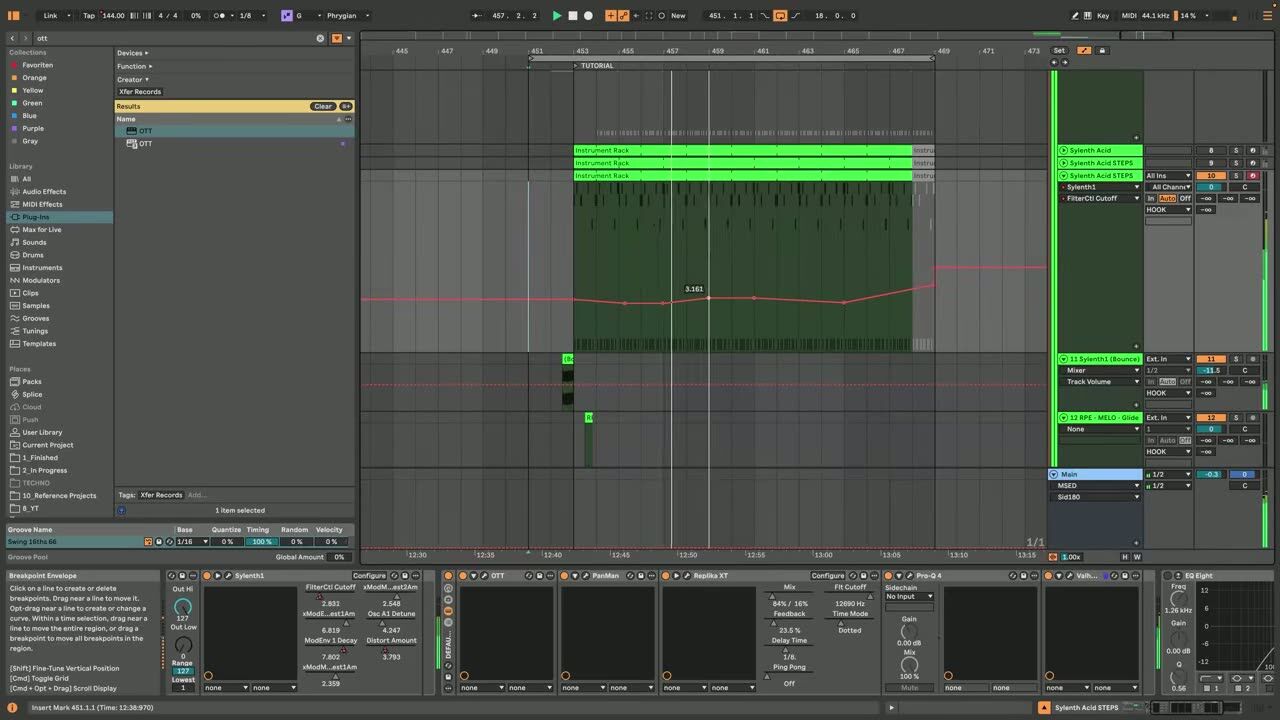
Add a touch of glide so notes slide into each other, and a small amount of detune to thicken the tone. Together they give that vintage, slightly-out Goa character that a perfectly clean patch lacks.
Do not overdo it. A little glide and detune reads as vintage, too much reads as broken.
The mixing chain: OTT, delay, reverb
▶ Play from 7:33Finish with a mixing chain: OTT or multiband compression to even out the dynamics and add aggression, delay for rhythmic space, and reverb for depth. Velocity accents feed into this so the loudest notes push hardest through the chain.
The chain is what makes the lead sit in a mix rather than sound like a raw synth patch.