Acid Lead in Serum 2 for Psytrance
Watch the full breakdown
Acid is one of the most useful sounds in the psytrance toolbox, and Serum 2 makes it easy once you know the routing. It is a saw through a resonant low-pass filter, with an envelope driving the cutoff so the filter squelches on every note.
In the video Psiger builds an acid lead in Serum 2 from the ground up. Here are the stages that matter.
- An acid lead is a saw through a resonant low-pass filter. Push the resonance so it rings.
- Route an envelope to the cutoff so the filter snaps open on each note. That is the squelch.
- Keep the filter envelope separate from the amp envelope for independent control.
- A fast filter envelope gives a plucky acid, a slower one gives a longer sweep.
- Glide and accents add bounce; distortion, delay and reverb add grit and space.
Saw into a resonant filter
▶ Play from 0:00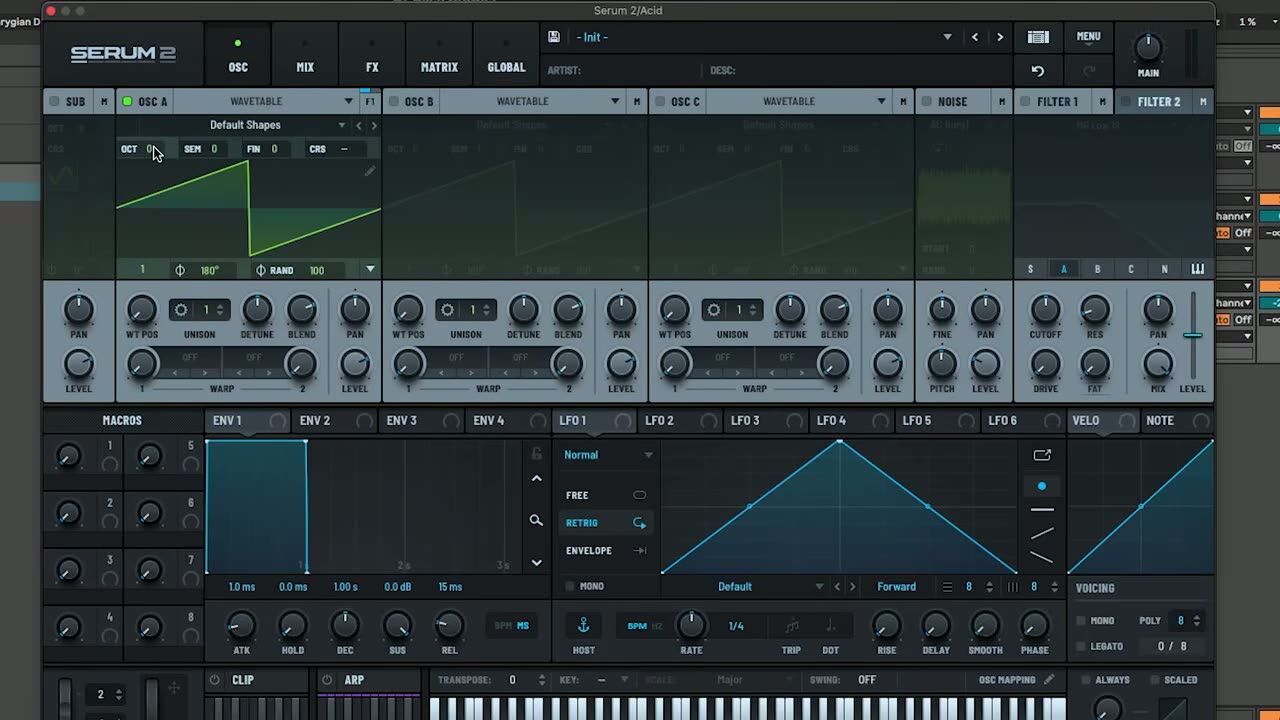
Start with a saw wave and route it into a low-pass filter with the resonance pushed up so it rings. That resonant filter is where the acid character lives; the oscillator is just fuel.
High resonance is non-negotiable here. Without it there is no squelch.
Envelope on the cutoff
▶ Play from 2:30Route an envelope to the filter cutoff so the filter snaps open at the start of each note and closes again. A fast envelope gives a tight, plucky acid; a slower one gives a longer sweep. This per-note movement is the acid squelch.
Keep this envelope separate from the amp envelope so you control the filter movement independently.
Glide, accents and effects
▶ Play from 4:30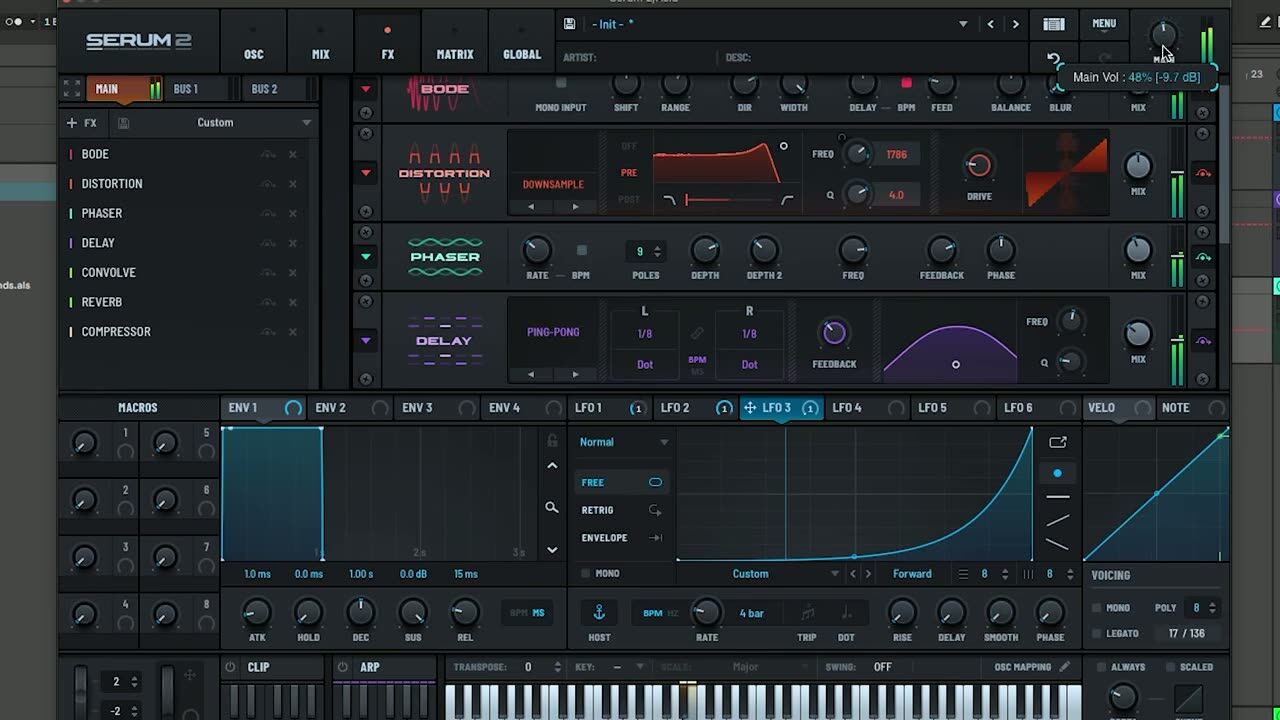
Add glide so notes slide into each other, accent certain notes so the filter opens further on them, and finish with distortion, delay and reverb. Glide and accents give the line its bounce and movement, and the effects give it space and grit.
These finishing touches are what separate a lively acid lead from a flat one.