Do I Need a Psytrance Mentor Yet?
There’s an awkward stage in learning to produce where you know enough to hear that something is wrong, but you can’t quite work out what.
You change the bass. Then the kick. Then you go back to the version you had yesterday because you’re not sure you improved anything.
You start thinking it might be useful to have someone look at it. But then you wonder whether your music is even ready to show anyone.
Or perhaps you’re much earlier than that. You’re still finding your way around Ableton, and getting a mentor feels like something you’re supposed to do later.
These are different starting points, but a lot of the questions are the same.
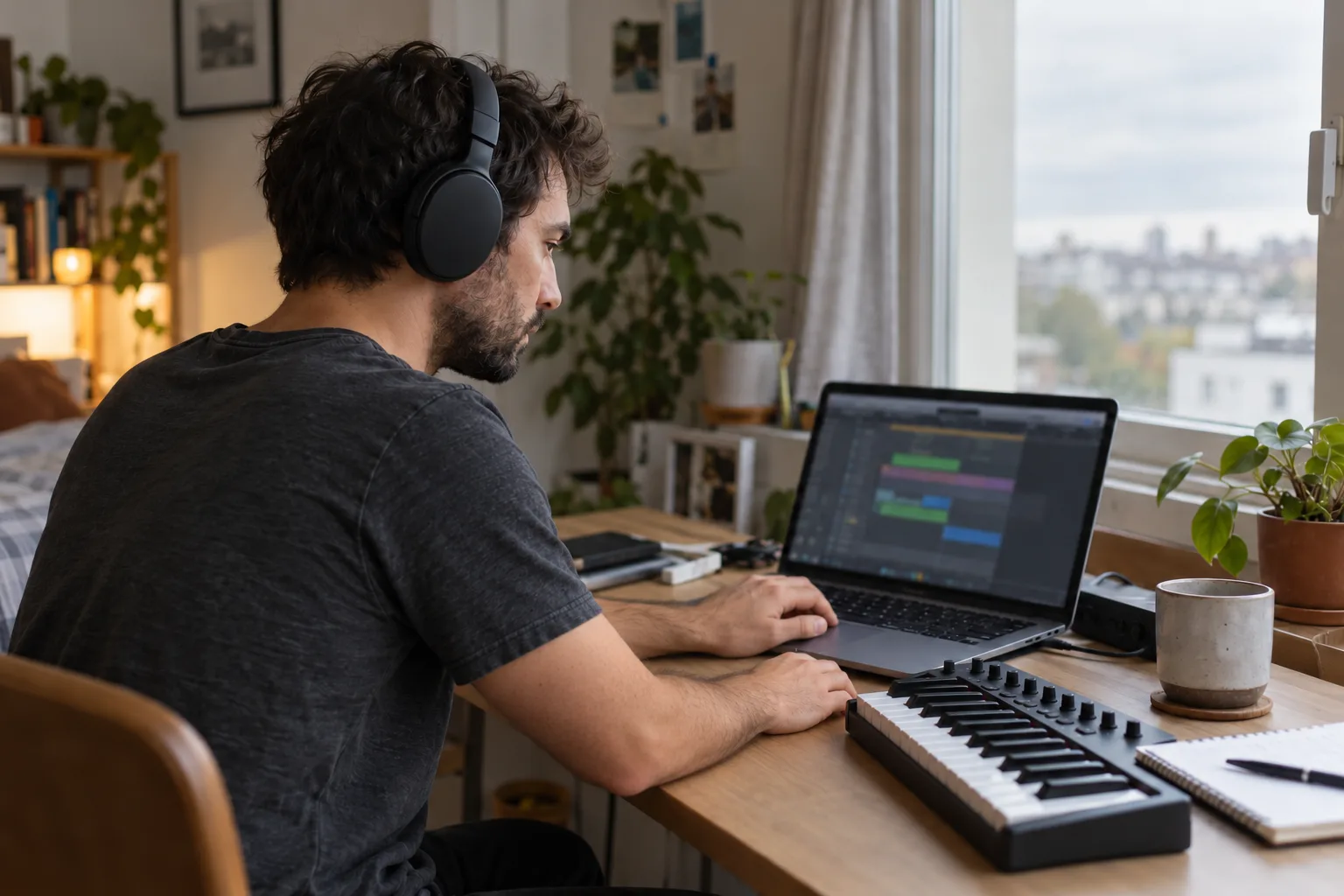
Do I need to get better first?
It can feel a bit embarrassing to show someone a rough project. Especially someone whose music you’ve been listening to for years.
You might want to tidy everything up first. Finish the arrangement. Fix the mix. Work out that thing you still don’t understand.
Of course, those might be exactly the things you need help with.
A useful teacher should be able to work with your current level. If you’re a beginner, that could mean helping you understand what to learn first and what you can leave alone for now. You don’t need a discussion about advanced mastering when you’re struggling to build a groove.
One of our students at Blueprint, Stefano, was just starting out with Ableton when he joined. He spent a year working hard and asking a lot of questions. Now he’s getting close to his first release.
He started while he still had all those beginner questions. There was plenty to work on already.
The first release is the biggest. It's the outcome of months of dedication and effort.
 Nagilum
Have I left it too late?
It can feel that way when you see people much younger than you already releasing music.
You might have been listening to Psytrance for years, going to parties and thinking about making something yourself. Now you finally have the interest, or the opportunity, and wonder whether you should have started earlier.
You probably would know more by now if you had. But that doesn’t tell you what you could learn by starting today.
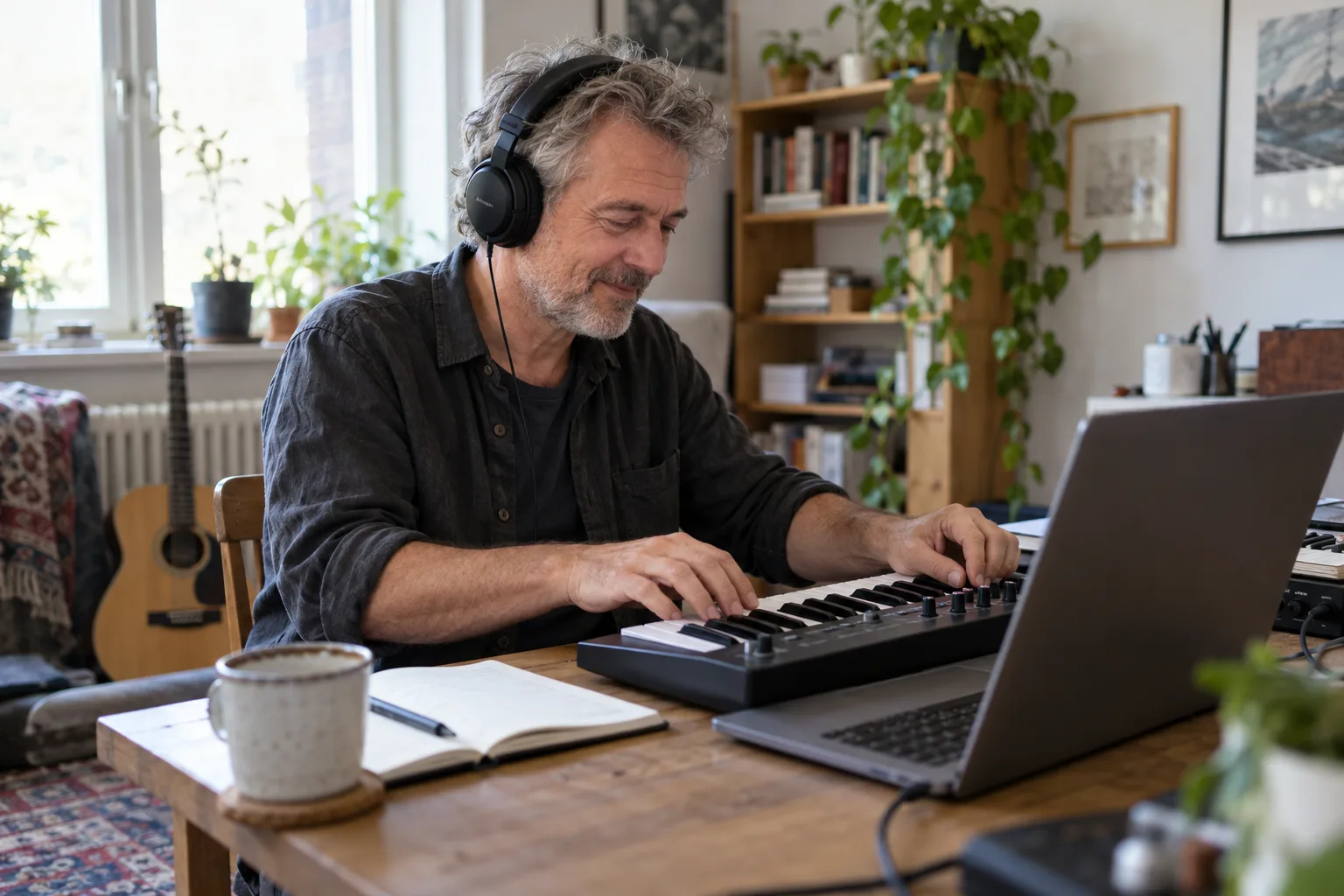
We have students across a wide range of ages. The useful conversations are usually about their music, their questions and how they can fit the work into their lives.
Years of listening give you references. You know which grooves make you move and which tracks hold your attention. Learning production means figuring out how those things are made, then trying to make your own decisions.
You may need a different routine from someone who can spend every afternoon in the studio. A teacher should be able to work with that. You don’t have to decide what your entire music career will look like before you start making a track.
What would a mentor actually help me with?
“Feedback” can mean quite different things.
Someone might listen and tell you the mix needs work. That could be true, but it doesn’t give you much to do when you reopen the project.
A useful review goes further:
- Where does the problem happen?
- What is causing it?
- What would be worth trying first?
Say your drop feels weak. You might spend another evening making the lead bigger, while someone else hears that too many elements have already entered before the drop. The sound itself may be fine. You’ve just left yourself nowhere to go.
That kind of outside perspective becomes useful when you keep circling the same decisions.
For someone more experienced, the questions might be less technical. Does the arrangement hold your attention? Which ideas give the track its character? Have you polished away something interesting because it didn’t sound like your reference?
Even though I have produced electronic music for years, Psytrance threw me completely.
 Astralik
 went on to sign with PSYPOOL Records after finishing the course. His debut, Pulse Vibration, was released in July 2026.
You should still have room to disagree. A mentor ought to be able to explain a suggestion, and you should understand what you’re testing when you try it.
Could I work this out myself?
Quite possibly.
There are excellent tutorials available, and experimenting is a big part of learning. Sometimes you need a few more evenings with a project before something clicks.
I’d look at whether your experiments are giving you answers.
If each track teaches you something and you have a reasonable idea of what to practise next, your approach may already be working well.
If you keep getting stuck in the same place, it can help to let someone else into the process. You might discover that the thing you’ve been trying to fix isn’t the main problem. Or that you were closer than you thought and needed to finish a version rather than rebuild it again.
The important part comes afterwards, when you try the advice. Listening to feedback without making changes can become another form of watching tutorials.
How do I know someone is right for me?
Liking their music is a good starting point. I’d also listen to how they explain things.
- Can you follow their reasoning?
- Do they understand the kind of music you want to make?
- Can you ask a basic question without feeling uncomfortable?
And find out what the arrangement actually involves. Are you getting comments on a finished bounce, a recorded walkthrough, a live conversation or feedback from other students? Can you bring back a revised version?
Your own schedule matters here too. You need some room to work between reviews, even if that’s a few shorter sessions around work and family.
Before contacting someone, it helps to put your situation into a couple of sentences: what you can already do, where you keep getting stuck, and what you’d like to work towards.
You don’t need to make your music sound more impressive than it is. A rough project and a clear question give you a useful place to begin.
Would a live course be a better fit?
If you enjoy learning in a room with other people, it’s worth considering.
Boomland School runs residential Psytrance production courses, for example. You could also check whether a DJ or production school near you offers short workshops or boot camps. An intensive can give you a useful overview and some dedicated time away from your usual routine.
Then there’s what happens when you get home and start applying it. That’s often when the more specific questions appear.
If you’d rather have support spread across the time you’re working on your own music, an ongoing course with personal feedback might suit you better.