Too Old to Start Music Production at 30, 40 or 50?
If you are 30, 40, 50 or older, you can start learning music production. The useful question is what you want from it and where practice will fit in your life. You do not need to prove that you could have started at sixteen.
Maybe Psytrance has been part of your life for years. You know the feeling of a track opening up a dancefloor, but the thought of making one yourself arrives with a second thought: everyone else has a head start.
That head start is real. Someone who has already spent years producing has experience you have not earned yet. It does not follow that you cannot begin. You need a workable next step and a goal you actually care about, rather than a deadline borrowed from someone else's career.
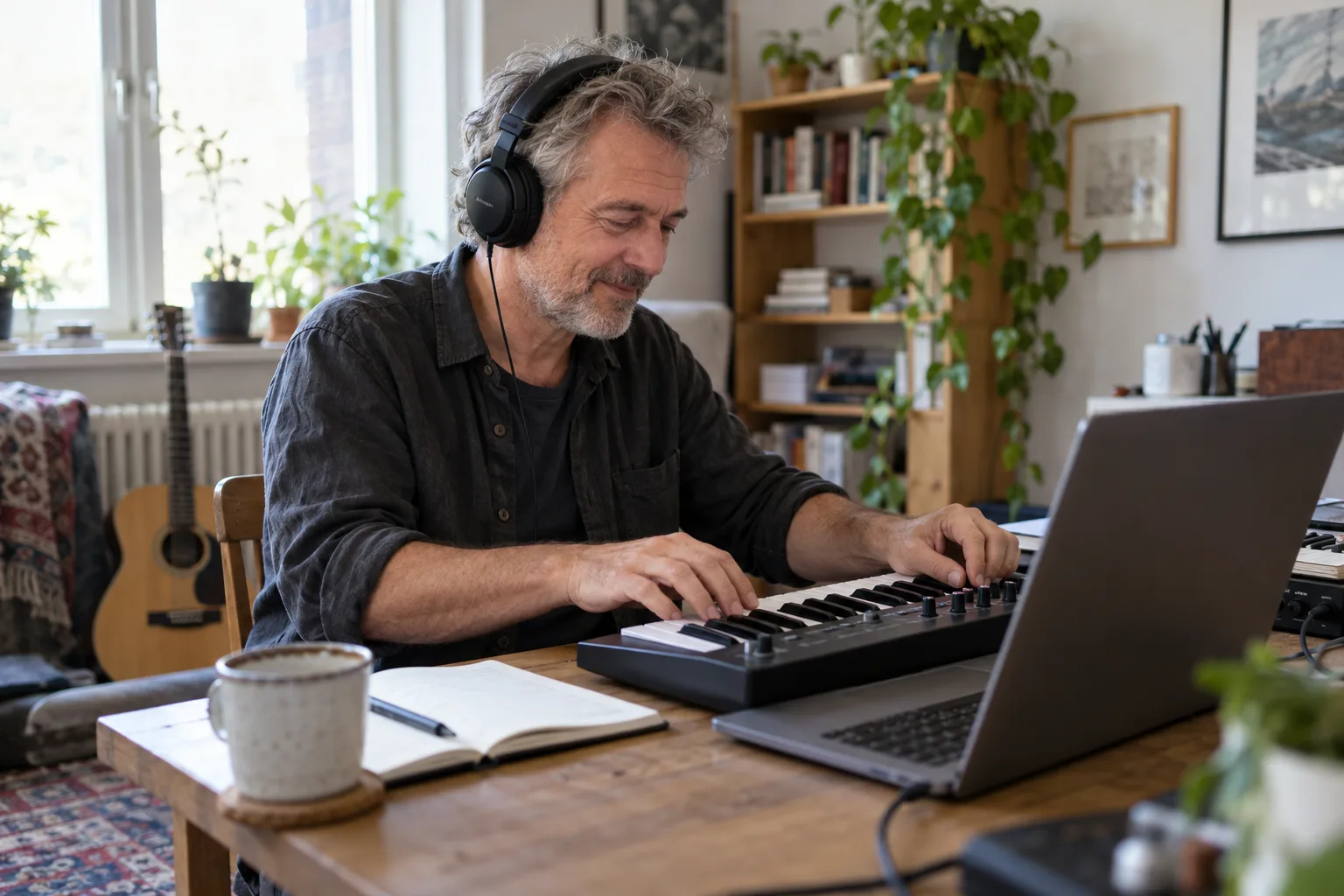
Separate making music from making a living
Learning to produce, finishing a track, releasing music and earning a living from it are different goals. You can want more than one, but they ask different things from you. Making a track for your own satisfaction does not require the same travel, promotion or financial risk as building a touring career.
- A creative practice after work: that is a complete reason to start.
- A label release: you will need to develop the music and learn how submissions work.
- Income: you also need to consider the business side and your financial responsibilities.
Age alone cannot settle any of those questions.
Be honest about the starting point. You may have excellent listening taste from years on dancefloors and no idea how to program a bassline. Those can both be true. Your experience gives you references; practice teaches you how to turn those references into decisions in a DAW.
What we can honestly say about learning later
Later-life learning is possible. In a 2024 study published in BMC Geriatrics, healthy older adults aged 64 to 76 with little musical training took part in a year-long musical intervention. Participants in the piano group learned musical skills. That is a useful counterexample to the idea that adults simply stop being able to learn music. Read the original study.
It is a piano study, not evidence about becoming a professional Psytrance producer. It cannot predict your release date, income or progress in a DAW. I would not use it to sell you that promise. Its more modest lesson is enough: being older does not, by itself, make musical learning pointless.
You may also bring habits that help: planning a week, staying with difficult work, asking a clear question. Do not assume those advantages cancel every constraint. Energy, responsibilities, access to time and previous experience differ between people of the same age. Build around your actual life.
Van Gogh and Grandma Moses, without the mythology
Vincent van Gogh chose to become an artist at 27, according to the Van Gogh Museum. That is later than the childhood-prodigy story we often expect, although 27 is hardly old. He had already worked and searched for a direction before choosing that path. The museum tells that part of his life here.
His story is often simplified into a motivational sales pitch. Even the familiar claim that he sold exactly one painting is misleading: the museum says the precise number of sales is unknown and explains that he sold more work. His life is not a reliable template for predicting anyone else's commercial success. See the museum's explanation of his sales.
Grandma Moses offers a different example. The National Museum of Women in the Arts describes how she turned from embroidery to painting in her late seventies when arthritis made needlework difficult. She was changing creative medium, not discovering creativity for the first time. Read the museum's biography.
These are exceptional lives, not typical outcomes. They do not prove that starting later guarantees recognition. They do challenge the rule that a serious creative life has to begin in childhood. You can take permission from that without turning it into a promise.
Build a week you can actually repeat
Start with the time you can protect. For example, try three sessions of forty-five minutes:
- Learn a technique.
- Use it in your own loop.
- Listen back and make a revision.
That is a suggested routine, not a minimum requirement or a formula for a release.
Keep the task small enough to finish inside those sessions. A kick and bass groove is a useful first result. So is a short transition or a simple arrangement built from sounds you already have. Leave a note when you stop: what worked, what still needs attention, what you will open next time.
If work or family interrupts the week, reduce the scope. A short return to the same project can be more useful than starting another ambitious track every time you find a spare evening. Choose a pace you can repeat without treating music as another source of guilt.
You can begin with our guide to starting Psytrance production. Follow one lesson, then spend time making something with it before opening the next one. The free tutorial library is there when you have a specific question.
Measure progress against your previous work
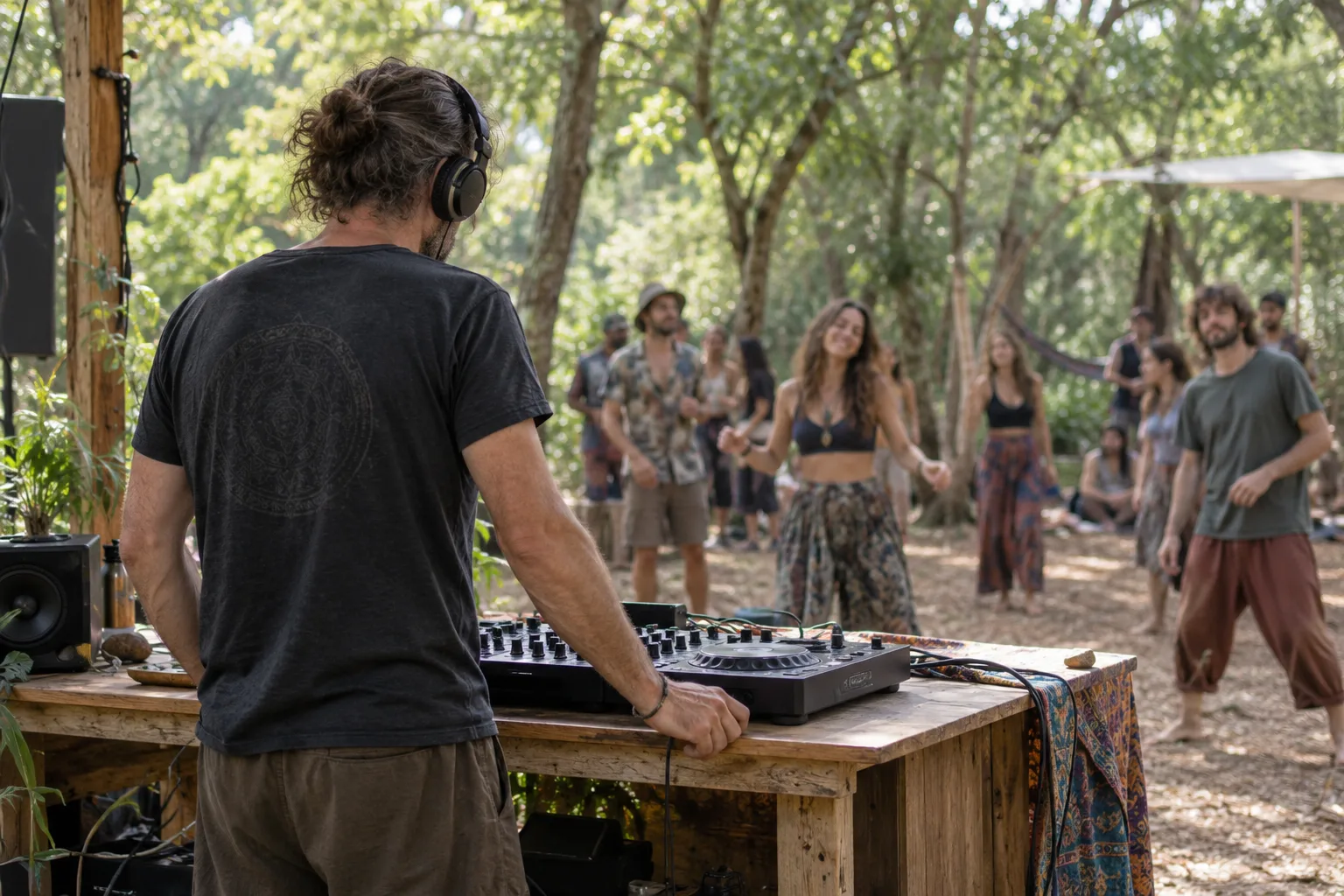
Do not compare your first month in a DAW with an artist's tenth year. Save exports so you can compare your own versions:
- Can you hear the bass more clearly?
- Does the transition make sense?
- Did you finish a small task that used to stop you?
Those are concrete signs of learning.
Release ambitions are allowed. So is taking the music seriously. Just avoid attaching a guaranteed timeline to either. A finished Psytrance track can require many rounds of decisions, and a label decides for itself what it wants to release. A course or mentor cannot remove that uncertainty.
If progress stalls, look for a reason you can act on: too many tools, unclear exercises, no arrangement practice, or no outside feedback. 'I am too old' explains none of those in enough detail to help you change the next session.
Choose support that respects your life
Self-study is a reasonable option if you enjoy it and keep moving. A structured course can help when you spend your limited studio time deciding what to learn. Personal feedback can help when you have made something and cannot hear what to improve next.
Before paying, check the expected workload, the teaching style, the software and the feedback format. At Blueprint, Fastlane combines the production curriculum with weekly personal 1-on-1 video feedback and priority; live Zoom calls are group calls. That structure is useful only if you have room to apply it.
You do not need to settle your entire musical future today. Pick a small project and a repeatable time to work on it. Let the next decision come from what you learn while making music.
Want a structured way to begin?
Explore the Blueprint course and its feedback approach. Check whether it fits your goals, your tools and the time you can give your music.
Explore the Blueprint course